
I experienced a dental endoscope for the first time at a dental conference. Endoscopy allows clinicians to see subgingivally in real time on a high-definition, magnified screen. I immediately realized there was a learning curve – you have to be like an octopus, multitasking with both hands and feet. Beyond multitasking, using a screen for indirect vision is unlike looking into a mouth mirror and more like looking into a mirror hung on the wall, making hand-eye coordination difficult. It felt like learning indirect vision and using loupes for the first time, but multiplied by 100.
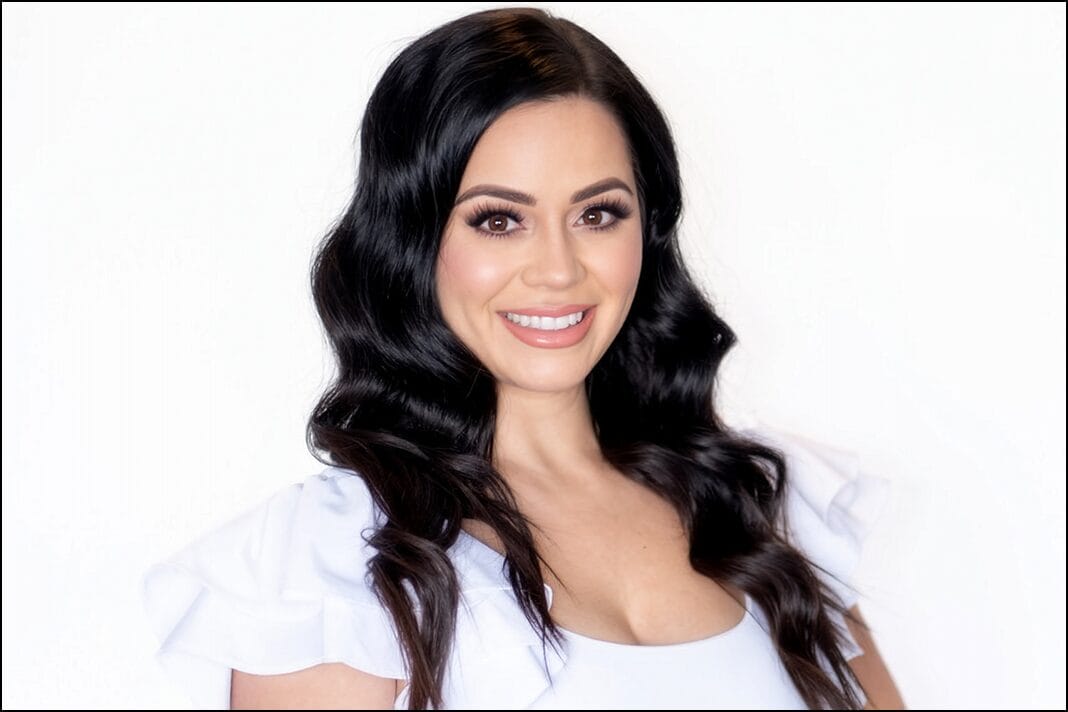
To learn more about dental endoscopy, I interviewed Marvelyn Navarro, RDH. Among her many pursuits, she is a co-founder of Perio Precise, which offers hands-on endoscopy training and partners with dental offices to provide patient care using periodontal endoscopic therapy.
Meet Marvelyn Navarro
Machado: What made you decide to become a dental hygienist?
Navarro: I have always loved helping people and have always been drawn to healthcare. While finishing high school and completing my college prerequisites, I worked at the front desk in a dental office. I saw firsthand how the hygienists worked – how they educated patients and how patients looked forward to seeing them. I also saw how their presence genuinely impacted people’s lives, from oral health to systemic health, to emotional support, to confidence.
That’s when it clicked for me: Dental hygiene wasn’t “just teeth.” It was connection, prevention, trust, and long-term health. I was torn between nursing and dental hygiene at the time, but I also knew I didn’t want to work on any other parts of the body (humor intended), so dental hygiene just made sense.
Machado: What are your favorite things about the dental hygiene profession?
Navarro: My favorite things are the opportunities to educate, connect, and genuinely talk with people. Helping patients chairside and watching their overall health and well-being improve is incredibly rewarding.
I also love building bridges and connecting with hygienists across the country – networking is truly my jam. I’ve met so many amazing individuals who have poured their knowledge into me, and I’ve had the honor of pouring mine into them as well. There is room for all of us to grow, advocate, support, and elevate this profession. I love being fully immersed in it through helping people, making an impact, and contributing to making our profession better.
Understanding Dental Endoscopy
Machado: When were you introduced to the dental endoscope, and what were your initial thoughts on it?
Navarro: I was introduced to the endoscope by a good friend and mentor, Peggy Chesser, who has since passed away. She was one of the first users in the country. I worked in the office where she used it frequently and saw her passion firsthand. Peggy even had a business model similar to the one I have today.
In dental hygiene school, I did my table clinic presentation on the dental endoscope and won first place. I knew then that this was something I wanted to incorporate into my practice one day because of the results – using a minimally invasive camera to perform periodontal treatment without flap surgery while still achieving similar outcomes. Subgingival superpowers for the win, who wouldn’t want that?
Machado: Can you explain how a dental endoscope is used and its benefits?
Navarro: The dental endoscope is 1 mm in diameter, smaller than the tip of a ballpoint pen. It is gently inserted subgingivally while attached to a dental explorer, which functions almost like an area-specific curette. This allows us to view a live image/video in real time on a magnified screen, ranging anywhere from 48x to 100x magnification depending on the unit.
The biggest benefit is true subgingival vision – you can actually see the calculus in real time and remove it simultaneously. We also frequently detect fractures, decay, gutta-percha exposure, root resorption, and other findings that are often missed during conventional exams, because radiographs are 2D and the tooth/root is 3D.
Because the endoscope allows us to see up to 15 mm subgingivally, we can effectively remove the contributors to periodontal disease – biofilm and the calculus. By eliminating calculus and the retentive surface where pathogenic red-complex bacteria adhere and accumulate, you remove the drivers of inflammation. This creates the environment needed for healing and reattachment on a clean root surface.
By visually confirming our work, we can ensure we truly removed everything – we are literally performing visual nonsurgical periodontal therapy in real time. It is a two-handed technique, which is why there is a learning curve, but once you master it, the precision and outcomes are worth it.
Machado: Are there any contraindications for periodontal endoscopy? What are the typical post-op instructions?
Navarro: There are no contraindications for using periodontal endoscopy. It is essentially the same as periodontal therapy and root surface debridement, just with visual assistance. There’s no cutting or surgical component involved.
Post-op instructions include reinforcing home care, such as interdental cleaning. We also ensure patients understand that even though we removed everything we could see that day, bacteria can start repopulating within 24 hours. Home care is everything. We also recommend they maintain their 3-month recare appointments, and full tissue healing and response can typically be seen around the 12-week mark.
The Learning Curve
Machado: How do you manage the coordination required for endoscopic instrumentation?
Navarro: Using the endoscope is like playing a video game because you are not looking down at the patient, but instead, you are looking at the screen while performing instrumentation. Your non-dominant hand holds the endoscope camera and acts as your “mirror,” while your dominant hand manages the ultrasonic. It takes a lot of practice, but once you get used to it, it becomes second nature.
I absolutely recommend using all your ultrasonic tips to access those hard-to-reach areas, because calculus and bacteria are smart, and they love to hide. Use the slimline, the triple bends, the lefts, the rights, use them all!
Machado: How long does it typically take for a clinician to feel confident using a dental endoscope?
Navarro: A general rule of thumb is that it takes about 50 to 75 quadrants before you really start to feel confident. Every clinician is different when it comes to hand skills and natural talent, but at the end of the day, it really comes down to practice, repetition, and truly honing in on this new skill.
Machado: What are the biggest challenges you have faced and find others facing when using an endoscope?
Navarro: One of the biggest challenges with the endoscope is simply getting the hang of it – practice truly makes perfect. The more you do it, the more comfortable and confident you become. Using your non-dominant hand and accessing those hard-to-reach areas in certain quadrants takes indirect vision to another level. For me, the upper left quadrant is always my nemesis.
Most clinicians who have trained with us say the same thing – this is not something you learn in one training session and suddenly become proficient at. You need consistent practice to develop true clinical competency. Less than 1% of clinicians in the U.S. know how to use the endoscope, not because it isn’t effective, but because it is a difficult skill to learn, and many simply give up. Some have even told me, “You make it look easier than it is.”
Machado: Do you have any tips or tricks that worked for you when using your dental endoscope?
Navarro: There are 4 different area-specific explorers available. When I first started, I laminated a chart of each explorer’s designated areas and kept it chairside for quick reference. My workflow was to use one area-specific explorer in all its designated sites first, finishing those completely before switching to the next. This helped me stay organized and prevented me from losing track of my place.
Machado: What advice do you have for someone who wants to start using a dental endoscope, or who has just begun?
Navarro: Comparison is the biggest mistake you can make. I’ve been using this technology for almost 9 years, so it is second nature to me now, but I still get humbled by some cases. The key is to keep going, keep refining your instrumentation skills, and take on the challenge. It will absolutely change the way you view instrumentation, and your anatomy class in hygiene school will suddenly make way more sense!
This is your opportunity to level up your advanced instrumentation skills and provide surgery-like results for your patients. It is a truly rewarding and fulfilling experience, so stick with it and do not give up. We are building a community and have created a Facebook group for endoscope users to collaborate and uplift one another: Dental Endoscope – The Clinicians Network. We want to help everyone work at this level.
Integration, Practice Management, and Training
Machado: Do you use the endoscope on every patient or only on those with active periodontitis?
Navarro: I truly wish we could use this on every patient! My goal is for endoscopy to become the standard of care, because why not get all the calculus off the right way, every single time?
For that to happen, we’ll likely need a smaller, more compact, and user-friendly version, something tablet-sized that can easily move from op to op. That would make it more accessible and realistic for everyday use, especially for hygienists who perform mobile periodontal endoscopy.
Currently, we primarily use it for early to advanced cases of periodontitis as a nonsurgical, minimally invasive approach to therapy. Periodontists appreciate it because they’re doing fewer flap surgeries than ever, and patients prefer it because they get the same results, without the downtime.
Machado: How does the use of the endoscope impact appointment times?
Navarro: We schedule 1 hour per quadrant to ensure we are thorough and clinically proficient. If we need more time, we take more time. We don’t stop until we’re done. We work every single tooth surface to ensure all calculus is removed.
Machado: Do you think general dental offices should incorporate dental endoscopy, or is it mainly for periodontal offices and periodontists?
Navarro: Dental endoscopy is not just for periodontists – it is also appropriate for general practices. That’s actually where I started before launching my own business. I recommend investing in the equipment. The results are fulfilling, clinically meaningful, and worth the investment. Patients also prefer avoiding flap surgery.
For any dentists reading this, there is an ROI in dental endoscopy. While equipment may seem expensive upfront, it pays for itself quickly. Take it from a hygienist who purchased her own unit with her business partner, Katie Benavides. We paid ours off quickly.
Machado: How do you sterilize and disinfect the different parts of the dental endoscope?
Navarro: The endoscope has a protective sheath that covers the fiber-optic camera to protect it from bloodborne pathogens and contamination. It is a single-use sheath, one per patient. We then sterilize all our explorers the same way we do any other instruments.
Machado: Do clinicians need to be certified to use an endoscope, and is training required?
Navarro: A hygienist does not currently need a certification, but formal training is necessary. You also need access to a unit to keep practicing the skill. If you don’t use it, you lose it. In the future, I would absolutely support a formal certification pathway.
Training can be completed directly through the endoscope manufacturer or through experienced trainers, as we do at Perio Precise. A training session is typically 1–2 days, depending on who you train with. Training days are full 8-hour days with live patients who have periodontitis, with real pocketing and calculus we can work with.
Patient Presentation and Outcomes
Machado: How do you present the dental endoscope to patients, and what are their typical reactions or concerns?
Navarro: I explain to patients that endoscopy is a minimally invasive approach to treating periodontal disease. Traditionally, periodontal therapy is performed blindly, and while it can yield good results, we can miss calculus that we can’t see. The alternative is flap surgery, which involves downtime and a longer healing period. With endoscopy, we can achieve similar results nonsurgically. If surgical intervention is still required, it’s usually localized, rather than involving full arches. It is also more cost-effective. I usually joke with patients that they can “eat, drink, and be merry” immediately after treatment, and they love that.
Patients’ main concern usually stems from “Dr. Google,” where they psych themselves out, thinking endoscopy is more intense than it really is. In reality, it’s essentially nonsurgical periodontal therapy, but with vision.
I also love showing videos. When presenting treatment options, there can sometimes be a lack of trust. I often joke about this with my cousin and brother-in-law, who are both dentists. We say going to the dentist can feel like going to a mechanic – you show up for one thing and leave with five new problems. That’s the perception for many patients. However, when you show a live video of calculus on a root surface, patients’ minds are blown because periodontal disease becomes very real. Now imagine showing them a playback of their own mouth. Patients are grossed out in the best way possible, and suddenly, they are motivated to clean interdentally and keep up with home care.
Machado: Can you think of a patient case that stands out to you involving dental endoscopy?
Navarro: One case that stands out was a patient with generalized class II–III mobility, about 8 mm of CAL, and 5–8 mm pockets. Tooth #14 specifically had a pocket over 10 mm. She could not afford implants at the time.
After I performed endoscopic therapy, her 3-month recare showed reduced pocket depths – from over 10 mm down to 5 mm. The tissue tightened, which made the teeth more stable. While we often see this type of tissue improvement and healing with endoscopy, I had to re-probe many of her sites because even I was in disbelief at the level of healing. We hear it all the time from dentists who work with us, “This is like having surgery without having surgery.”
She is still hanging on to many of those teeth today while she prepares financially for implants, and was thrilled that we were able to keep her stable in the meantime.
The Future and Final Thoughts
Machado: What do you hope to see in the future of our profession? Do you think using dental endoscopes should be more mainstream?
Navarro: I see us as prevention specialists integrated into multiple medical and dental settings – practicing to the full extent of our education as licensed healthcare providers. I wholeheartedly believe dental endoscopes should be the gold standard of care, and it is my mission to spread as much awareness as possible about this incredible, underutilized technology. I am not here to gatekeep – I’m here to open the gates and let everyone in.
Machado: What is the biggest takeaway that you hope readers will get about dental endoscopy?
Navarro: The biggest takeaway I want readers to walk away with is this: If you had a disease, wouldn’t you want the most appropriate, effective treatment the first time, rather than going through multiple sessions and hoping it works? If you could treat your disease with the best line of defense right away, wouldn’t you choose that?
We should approach our patients the exact same way, treating them as whole people, not just teeth. One of my favorite quotes is from William Osler: “The good physician treats the disease; the great physician treats the patient who has the disease.”
This is why a patient-centered approach matters. If we have a tool that allows us to remove calculus thoroughly and visually, why would we not use subgingival vision with all of our patients? We are prevention specialists. Thorough debridement and patient education are at the heart of what we do. We have the ability to see subgingivally, so let’s use it.
Machado: What are you most proud of from your career so far?
Navarro: I am most proud of becoming a key opinion leader (KOL) and owning my own business. Imposter syndrome is very real – and many of the battles we fight are in our own heads. I never would have imagined becoming a KOL in our profession, yet here I am. I love public speaking and helping others. I truly love this profession. I’m passionate about what I do, and I want to share this message with as much clarity, simplicity, and impact as possible. Now, as both a speaker and a content creator (@marvelynrdh), I have the platform to do that.
As a business owner, I’m showing other hygienists that autonomy is achievable within our current scope of practice. As a first-generation college graduate, I’m making my family proud. My parents sacrificed so much and worked incredibly hard – their work ethic is how I lead by example.
Now, I’m also setting that same example for my little ones. I want them to see firsthand what perseverance, belief in self, and hard work can create. Staying humble is key – always. You truly can do anything you set your mind to. I am also deeply grateful to my husband. He has always supported me being fully myself, even during the unknowns.
Machado: What is the best piece of advice you received that has stuck with you?
Navarro: The best advice I’ve ever received is to never let outside noise or opinions dim your light. People only see a small glimpse of who you are – they don’t know your thoughts, your goals, your intentions, or the work you put in behind the scenes. People will always have opinions. That part never changes. But staying grounded in who you are and being authentically yourself is everything. The right people will stay for the entire ride. You really can do what you set your mind to. Mindset and belief in yourself are everything.
Machado: Is there anything you would like to add?
Navarro: If anyone would like to chat further, please feel free to email me at marvelyn.rdh@gmail.com. You can also find me @marvelynrdh on social platforms and @perioprecise to follow all my professional endeavors and journey. I love to lead by being authentically me and having fun while we are at it!
In Closing
Marvelyn Navarro is a great example of how far dental hygienists can go with patient care. We are beyond “just cleaning teeth” with a couple of hand instruments – our profession offers many technologies, adjunct therapies, and advanced skills. By embracing innovations like the dental endoscope, we aren’t just treating disease. We are elevating the standard of patient care.
Before you leave, check out the Today’s RDH self-study CE courses. All courses are peer-reviewed and non-sponsored to focus solely on high-quality education. Click here now.