
Are you in need of CE credits? If so, check out our peer-reviewed, self-study CE courses here.
Test Your Oral Manifestations of Vascular Diseases Knowledge
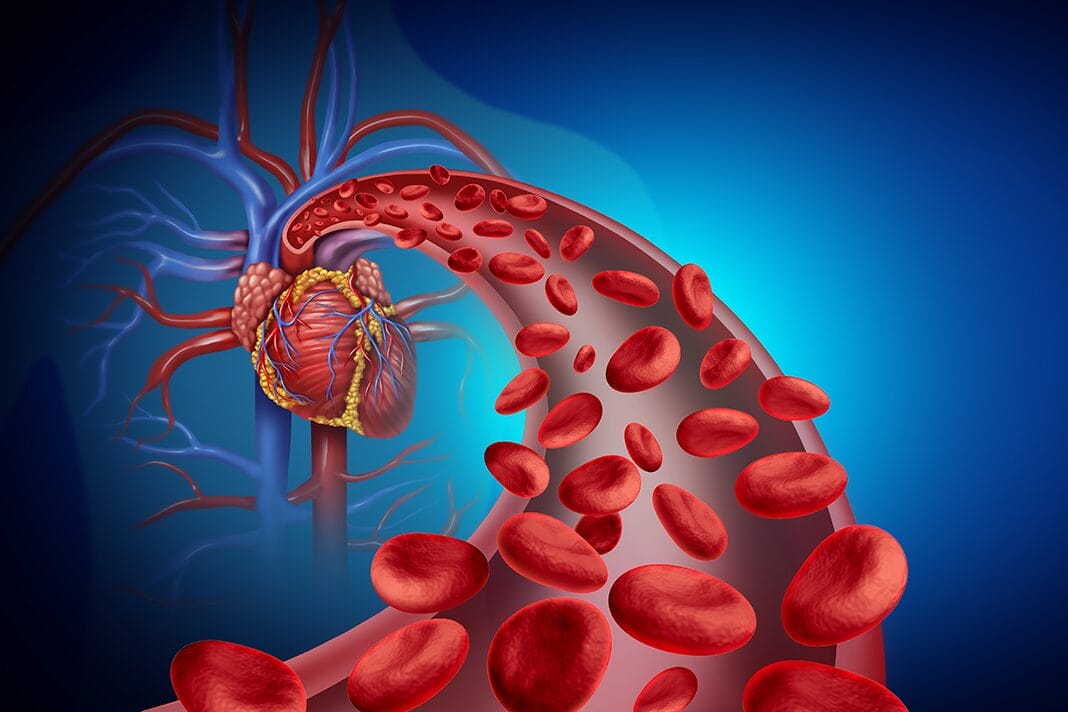
1. Vascular diseases are common conditions that affect the vascular system in a variety of ways. Coronary artery disease is among the most recognized vascular diseases.
Vascular diseases are common conditions that affect the vascular system, including arteries, veins, and capillaries. Certain people are at an increased risk of developing these diseases, with risk factors including, but not limited to, age, family history, infection, sedentary lifestyle, obesity, pregnancy, and smoking.1
Among the most recognized vascular conditions is coronary artery disease (CAD), a type of cardiovascular disease that involves the narrowing or blockage of an artery, most commonly due to plaque buildup (atherosclerosis). Cardiovascular disease (CVD) is a primary causative factor associated with many vascular diseases.1 CVD is the leading cause of death in the United States, with 1 in every 3 deaths attributed to it in 2023.2 Other contributing factors include genetics, infection, injury, and certain medications (including hormones).1
Many types of vascular diseases exist, such as:
- Aneurysm
- Atherosclerosis
- Blood clots
- Raynaud phenomenon
- Stroke
- Varicose veins
- Vasculitis1
However, dental professionals should also recognize multiple less common vascular diseases because many present with oral manifestations. It is well documented in the literature that oral manifestations of many systemic diseases are visible before systemic signs and symptoms present.3 In other cases, understanding potential oral manifestations associated with systemic conditions, such as vascular diseases, is crucial to better create patient-centered treatment plans.4
References
1. Vascular Diseases. (2024, July 1). MedlinePlus. https://medlineplus.gov/vasculardiseases.html
2. Heart Disease Facts. (2024, October 24). Centers for Disease Control and Prevention. https://www.cdc.gov/heart-disease/data-research/facts-stats/index.html
3. Ukwas, A., Porter, S.R.. The Potential of Oral Healthcare Providers to Recognise Early Systemic Disease. Br Dent J. 2025; 239(4): 249-255. https://pmc.ncbi.nlm.nih.gov/articles/PMC12373497/
4. Ossa Galvis, M.M., Bhakta, R.T., Tarmahomed, A., et al. Cyanotic Heart Disease. (2023, June 26). StatPearls. https://www.ncbi.nlm.nih.gov/books/NBK500001
2. Cyanotic heart disease causes systemic hypoxia and is associated with physiological changes, including which of the following oral manifestations?
Congenital heart disease (CHD) is defined as structural abnormalities of the heart or major vessels that occur during fetal development. As the most common congenital anomaly, CHD is the leading cause of death in children. CHD is typically classified into 2 subtypes: non-cyanotic CHD and cyanotic CHD.1
CHD affects approximately 8 to 9 per 1,000 live births, though its exact cause remains unknown.1 Due to early diagnosis and significant advances in treatment, the life expectancy for these individuals has dramatically improved. This has resulted in a growing adult population with CHD, necessitating a shift in how dental professionals approach their oral care and management.2
Patients with cyanotic CHD have lower-than-normal oxygen levels in their blood, leading to cyanosis (bluish or purplish discoloration of the skin and mucous membranes).1 This systemic hypoxia and associated physiological changes can cause several characteristic oral findings:
- Cyanotic oral mucosa1
- Enamel hypoplasia
- Increased caries risk
- Increased risk of apical periodontitis
- Increased risk of periodontitis2
CHD is one of the conditions that significantly contributes to an increased risk of infective endocarditis following certain dental treatments, making prophylactic antibiotics necessary. Optimal care requires collaboration with cardiologists to determine the need for and the proper regimen for prophylactic antibiotics.3
Dental professionals should emphasize the importance of daily oral hygiene and regular dental visits to reduce the overall bacterial load and minimize the risk of dental caries, periodontitis, apical periodontitis, and potentially dangerous bacteremia in these vulnerable patients.2
References
1. Ossa Galvis, M.M., Bhakta, R.T., Tarmahomed, A., et al. Cyanotic Heart Disease. (2023, June 26). StatPearls. https://www.ncbi.nlm.nih.gov/books/NBK500001
2. Folwaczny, M., Bauer, F., Grünberg, C. Significance of Oral Health in Adult Patients with Congenital Heart Disease. Cardiovasc Diagn Ther. 2019; 9(Suppl 2): S377-S387. https://pmc.ncbi.nlm.nih.gov/articles/PMC6837931/
3. Wilson, W., Taubert, K.A., Gewitz, M., et al. Prevention of Infective Endocarditis: Guidelines from the American Heart Association. J Am Dent Assoc. 2008; 139(Suppl 1): S11-S24. https://jada.ada.org/article/S0002-8177(14)62745-8/fulltext
3. Oral manifestations are often the first sign of hereditary hemorrhagic telangiectasia (HHT).
Hereditary hemorrhagic telangiectasia (HHT), formerly known as Osler-Weber-Rendu disease, is an autosomal dominant bleeding disorder caused by vascular malformations. It is a multisystemic condition that affects the skin, mucosa, and multiple organs.1
HHT affects approximately 1 in 5,000 to 8,000 individuals, with race and gender being equally affected. The underlying issue is a mutation in 1 of 3 genes in about 97% of diagnosed cases, which reduces vessel wall elasticity and leads to the dilation of the vascular lumen.1 This results in fragile vessels that appear as small, red lesions often described as broken capillaries or spider veins.1,2
The oral cavity is a critical area for diagnosis:
- Oral manifestations are often the first clinical sign.
- Physical examination may reveal visibly broken capillaries on the hard palate, gingiva, mucosa, tongue and/or lips.
- Signs usually appear around age 40, but cases in children have been documented.3,4
Upon recognizing these lesions, dental professionals should immediately inquire about frequent nosebleeds (epistaxis) or a family history of HHT.3,4
HHT carries a risk of serious complications, including stroke, heart failure, venous thromboembolism, brain abscesses, and pulmonary hypertension. Given that many cases are not diagnosed until a major event, such as a stroke, the dental professional's screening role is vital for increasing early diagnosis and potentially decreasing the risk of serious complications.3
Management and treatment are individually tailored due to the wide variation in the condition's effects. There are no standard curative therapies, instead, HHT is generally managed through supportive care, prevention of complications, and reducing symptoms.3
References
1. Locke, T., Gollamudi, J., Chen, P. Hereditary Hemorrhagic Telangiectasia (HHT). (2022, December 12) StatPearls. https://www.ncbi.nlm.nih.gov/books/NBK578186/
2. Sandean, D.P., Syed, H.A., Winters, R. Spider Veins. (2024, September 19). StatPearls. https://www.ncbi.nlm.nih.gov/books/NBK563218/
3. Niklasson, J., Rönnblom, A., Lidian, A., Thor, A. Oral Manifestations and Dental Considerations of Patients with Hereditary Hemorrhagic Telangiectasia: A Scoping Review. Oral Surg Oral Med Oral Pathol Oral Radiol. 2023; 136(6): 691-702. https://www.oooojournal.net/article/S2212-4403(23)00614-4/fulltext
4. McDonald, J., Stevenson, D.A. (2021, November 24). Hereditary Hemorrhagic Telangiectasia. GeneReviews. https://www.ncbi.nlm.nih.gov/books/NBK1351/
4. A patient aged 75 presents with a new severe headache combined with reported jaw pain upon eating. Which vascular condition should be considered in the differential diagnosis?
Giant cell arteritis (GCA) is the primary cause of temporal arteritis (TA) and is recognized as the most common vasculitis in adults. It is a granulomatous vasculitis that targets large and medium vessels, specifically affecting the aorta and the extracranial branches of the external carotid artery, such as the temporal artery. When the temporal artery is involved, it is referred to as TA.1
The onset of TA typically occurs after age 50, with the peak incidence between the seventh or eighth decade of life. While the exact cause has not been identified, it is postulated that an infectious or non-infectious agent could trigger the autoimmune cascade that leads to the disease onset.1
The key consequence of GCA is vascular remodeling that results in the stenosis or occlusion of the affected arteries. This arterial involvement leads directly to ischemic signs (lack of blood flow) in the head and neck.1
The most frequently reported symptom of TA is severe headache, often localized over the temporal or occipital region. This pain typically does not respond to over-the-counter pain medication and can be so intense at night that it causes insomnia.1
Additional cephalic ischemic signs include:
- Jaw claudication: Pain or cramping in the muscles of mastication when chewing
- Scalp tenderness: Pain when palpating the scalp
- Necrosis: More rarely, compromised blood flow can lead to necrosis of the scalp or tongue1
Upon clinical presentation, the temporal artery may be enlarged, tender to the touch, and lack a palpable pulse. Diagnosis officially requires a biopsy of the temporal artery. However, this method is not 100% sensitive, with efficacy reported between 60% and 80%, meaning a negative biopsy does not entirely rule out GCA or TA.1
Treatment and management are crucial and time sensitive to prevent serious complications such as irreversible vision loss (ocular ischemia). The condition is managed effectively with glucocorticoids (corticosteroids).1
Reference
1. Greigert, H., Ramon, A., Tarris, G., et al. Temporal Artery Vascular Diseases. J Clin Med. 2022; 11(1): 275. https://pmc.ncbi.nlm.nih.gov/articles/PMC8745856/
5. Diagnostic criteria for Bechet’s disease include which oral manifestation?
Bechet's disease (BD) is a chronic, auto-inflammatory disorder that causes systemic vasculitis and affects multiple organs. It is classically known for its triad of symptoms: aphthous stomatitis, genital ulcers, and iritis (eye inflammation). The condition is more prevalent among individuals of Mediterranean and Middle Eastern descent. The exact cause remains unknown, but it is believed to result from a complex interaction between environmental factors and genetic susceptibility.1
Currently, there is no single, specific test for BD. Diagnosis is based on the recurrent nature and patterns of specific clinical signs and symptoms. The diagnostic criteria require recurrent oral ulcerations (at least 3 episodes over the last 12 months) plus 2 of the following "hallmark" systemic symptoms:
- Recurrent genital ulcerations
- Eye inflammation
- Cutaneous lesions
- Positive pathergy reaction test (skin test)1
Given that recurrent aphthous ulcers (RAU) are a required criterion, dental professionals play a vital role in early diagnosis. Awareness of the association between severe, frequent RAU and BD can initiate the appropriate medical referral.1
There is no universal treatment for BD. Management is individualized based on the patient's specific signs and symptoms. Successful diagnosis and treatment necessitate a multidisciplinary approach. Early recognition of the oral manifestations can significantly improve patient's quality of life by allowing timely initiation of treatment.1
Reference
1. Soares, A.C., Pires, F.R., de Oliveira Quintanilha, N.R., et al. Oral Lesions as the Primary Manifestations of Behçet's Disease: The Importance of Interdisciplinary Diagnostics - A Case Report. Biomedicines. 2023; 11(7): 1882. https://pmc.ncbi.nlm.nih.gov/articles/PMC10377315/
6. "Strawberry-like" gingivitis is usually the first sign of granulomatosis with polyangiitis (GPA), formerly known as Wegener's granulomatosis.
Granulomatosis with polyangiitis (GPA), formerly known as Wegener's granulomatosis, is a multisystemic inflammatory disease characterized by vasculitis of the small and medium vessels. It most commonly affects the lungs and kidneys. While the etiology is unknown, it is believed to originate from various stimuli in genetically susceptible individuals. GPA is associated with substantial morbidity and mortality if left untreated and is observed more frequently in white females.1
Dental professionals can help in the early diagnosis of GPA because the initial manifestations can occur in the head and neck region. Although oral manifestations are uncommon during the disease course and are rarely the first sign, clinical recognition is still vital. The official diagnosis can take a prolonged period, during which these signs may be the only visible evidence.1
Specific oral and systemic manifestations include:
- "Strawberry-like" gingivitis: This is the characteristic, highly specific, although uncommon, oral sign of GPA.
- Non-healing ulcers: GPA can cause chronic, non-responsive erosive or ulcerative lesions that may mimic other inflammatory conditions.1
- Systemic symptoms: Oral signs may be accompanied by classic upper respiratory tract symptoms, such as chronic, non-responsive sinusitis and otitis, or by granulomatous nasal lesions that can lead to a saddle nose deformity due to nasal septum destruction.1,2
There is no standardized treatment protocol for GPA, but most patients respond well to immunosuppressive therapy, including high doses of steroids, cyclophosphamide, and/or azathioprine. Immunosuppressive therapy has significantly improved the 5-year survival rate to 70% to 80%, though many patients do not achieve lasting remission.1
References
1. Labrador, A.J.P., Valdez, L.H.M., Marin, N.R.G., et al. Oral Granulomatosis with Polyangiitis a Systematic Review. Clin Exp Dent Res. 2023; 9(1): 100-111. https://pmc.ncbi.nlm.nih.gov/articles/PMC9932239/
2. Kumar, N., Gomes, P.L., Jett, S., et al. Saddle Nose in Granulomatosis with Polyangiitis (GPA) vs. Non-GPA Patients with Septal Perforations. Laryngoscope Investig Otolaryngol. 2025; 10(4): e70217. https://pmc.ncbi.nlm.nih.gov/articles/PMC12337746/
7. Vascular anomalies (VAs) are a diverse group of congenital disorders resulting from abnormal formation of nervous tissues. Though rare, the head and neck region can be affected.
Vascular anomalies (VAs) are a diverse group of congenital disorders resulting from abnormal formation of blood and/or lymphatic vessels. Their clinical presentation and severity vary widely, leading to diagnostic challenges due to frequently overlapping symptoms between different types. While many cases manifest during childhood, affected individuals often continue to experience complications into adulthood.1
The head and neck region is highly susceptible to VAs, with approximately 70% of all patients having lesions in this area. When VAs involve the oral cavity and maxillofacial region, patients frequently encounter a range of oral health issues, including:
- Facial asymmetry or disfigurement
- Oral cavity obstruction
- Mucosal bleeding
- Increased risk of dental caries throughout childhood and adolescence1
The most common reported oral health issues of VAs in the head and neck that specifically warrant a dental referral are:
- Bleeding
- Overgrowth of tissue
- Dental crowding
- Dental caries/infection
- Jaw pain1
Due to the complex nature of VAs, treatment and management are highly individualized and require a multidisciplinary approach involving specialized care. Therapies can include surgery and/or laser treatment, interventional radiology, and drug therapy.2
Drug therapies fall into two categories:
- Antiangiogenic (to shrink the anomaly): These medications include beta-blockers, mTOR inhibitors, interferon, vincristine, thalidomide, and targeted therapies.
- Medications to improve functionality and manage complications: These medications include anticoagulants, steroids, and tranexamic acid.2
The role of dental professionals include:
- Perform routine screening for VAs in the head and neck.
- Immediate referral to a multidisciplinary vascular anomalies center or vascular specialist for definitive VA diagnosis and specialized treatment planning, as invasive dental procedures, such as a surgical extraction, on undiagnosed or poorly managed high-flow lesions (i.e., arteriovenous malformations) can be life-threatening and result in multiple days in an intensive care unit.
- Prevention measures for patients with VAs, such as individualized oral hygiene instructions, sealant application, and topical fluoride use, must be rigorous to minimize the need for invasive procedures over the patient's lifetime.1
References
1. Mitra, S., Shen, D., Afshar, S. Assessing the Dental and Oral Health Needs at Vascular Anomalies Centers Across the United States. J Vas Anom. 2022; 3(1): e031. https://journals.lww.com/jova/fulltext/2022/03000/
2. Léauté-Labrèze, C. Medical Management of Vascular Anomalies of the Head and Neck. J Oral Pathol Med. 2022; 51(10): 837-843. https://pmc.ncbi.nlm.nih.gov/articles/PMC10087965/