

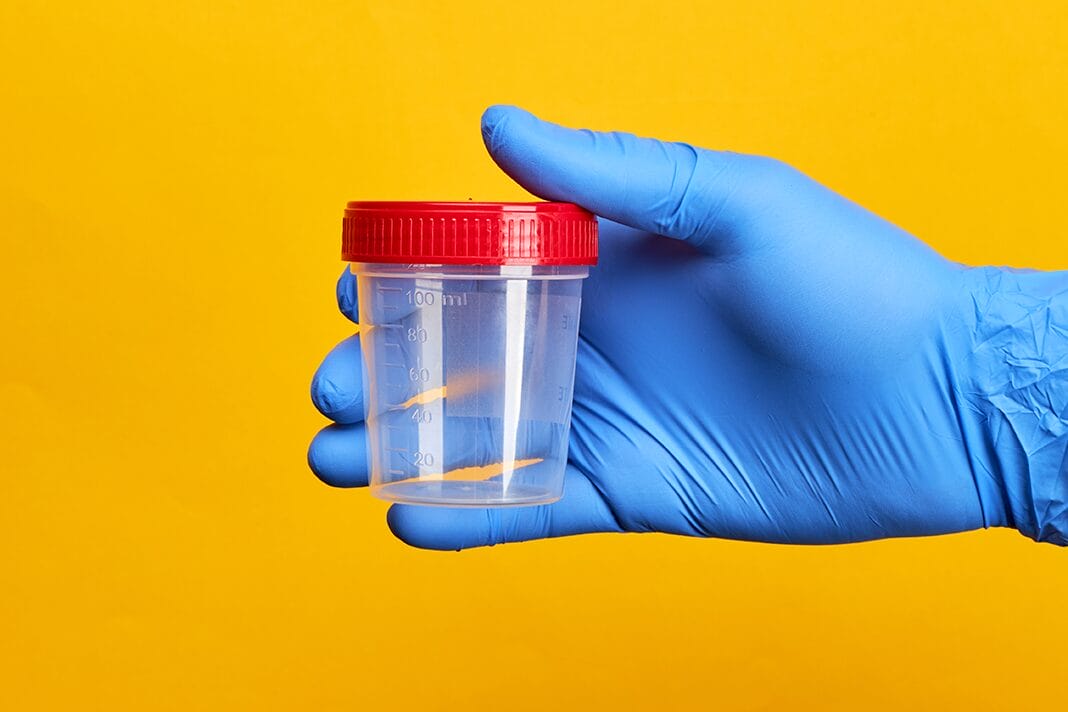
Researchers at the University of Michigan Health Rogel Cancer Center have developed a urine-based test capable of detecting minute DNA fragments shed by HPV-positive oropharyngeal squamous cell carcinoma (OPSCC). Recently published in JCI Insight, the study introduces a novel approach that holds promise for the early detection of a cancer type currently lacking a dependable, noninvasive screening method.1
While human papillomavirus (HPV) is most commonly associated with cervical cancer, its role in the rising incidence of OPSCC is increasingly significant. The development of a noninvasive screening method has the potential to help reach underserved populations and enable more effective cancer screening at a population-wide level, allowing earlier detection and improved patient outcomes.1,2
The Study
Using whole-genome sequencing, the research team found that a higher proportion of cell-free DNA (ctDNA) fragments released by tumor cells – which are transported from the bloodstream into urine via the kidneys – are ultrashort (less than 50 base pairs). Conventional liquid biopsy tests, designed to detect longer DNA fragments, are likely to miss these shorter fragments, rendering them undetectable in urine or blood samples.1
Due to this limitation, researchers created a droplet digital PCR (ddPCR) assay designed to measure transrenal cell-free tumor DNA (TR-ctDNA) in urine. This method offers absolute quantification, greater precision, and higher throughput compared to next-generation sequencing (NGS).1
The assay was specifically developed for patients with HPV-positive OPSCC. Unlike HPV-positive cervical cancer, where tumor DNA can be shed directly into urine, HPV16-positive DNA in the urine of patients with OPSCC must be transrenal (filtered from the blood by the kidneys). The researchers identified HPV16 as an ideal target for this TR-ctDNA assay because:
- Prevalence: Roughly 90% of patients with HPV-positive OPSCC share the HPV16 subtype, making a single assay applicable to the vast majority of cases.
- Specificity: As a nonhuman sequence, HPV16 provides a low background signal in patients without HPV-positive OPSCC.
- Signal strength: HPV16 can integrate at multiple sites within the tumor genome, providing a higher detectable signal per tumor genome.1
The Results
The study found that targeting these ultrashort fragments is essential for effective detection. When using the ultrashort amplicon assay, urine TR-ctDNA detection rates in patients with HPV-positive OPSCC matched those found in plasma ctDNA. Additionally, in a small case series using longitudinal samples, the researchers demonstrated a successful “proof of concept” for detecting early cancer recurrence.1
Beyond head and neck cancers, the methodology also appears adaptable to other malignancies. The test successfully identified ctDNA in urine samples from patients with breast cancer and acute myeloid leukemia, suggesting a broader application in oncology.1
Conclusion
Co-first author Chandan Bhambhani, Ph.D., noted, “Our study underscores that traditional assays fail to identify ultrashort fragments present in urine, as they’re optimized for longer DNA strands. We’ve taken an unconventional path to engineer a urine test specifically targeting these elusive fragments.”2
While still in the exploratory phase, a mail-in version of this test has already been distributed to patients within a 100-mile radius of Ann Arbor, Michigan, for research purposes. Participants submit a urine sample, which is then shipped back to the University of Michigan laboratory for analysis, enabling the detection of OPSCC.2 The convenience of self-collection makes urine-based assays more appealing for cancer detection and monitoring than blood-based alternatives, potentially enhancing healthcare access for populations that face challenges accessing healthcare facilities.1

While more research is necessary, these findings suggest that focusing on the detection of ultrashort cancer-derived DNA fragments is critical to unlock the full potential of TR-ctDNA analysis. This approach enhances noninvasive, sensitive, and widely accessible cancer detection and monitoring across diverse clinical applications.1
Before you leave, check out the Today’s RDH self-study CE courses. All courses are peer-reviewed and non-sponsored to focus solely on high-quality education. Click here now.
Listen to the Today’s RDH Dental Hygiene Podcast Below:
References
- Bhambhani, C., Kang, Q., Hovelson, D.H., et al. ctDNA Transiting into Urine Is Ultrashort and Facilitates Noninvasive Liquid Biopsy of HPV+ Oropharyngeal Cancer. JCI Insight. 2024; 9(6): e177759. https://insight.jci.org/articles/view/177759
- Michigan Medicine – University of Michigan. (2024, April 16). Researchers Discover Urine-Based Test to Detect Head and Neck Cancer. ScienceDaily. www.sciencedaily.com/releases/2024/04/240416214642.htm