
Many patients experience heightened anxiety when visiting the dental office, often due to traumatic past experiences or a perceived lack of control during their visit. Unfortunately, it only takes one bad experience to create a lifetime of dental fear and anxiety.1 With personalization, empathy, and a focus on patient comfort, dental hygienists can help patients decrease their dental anxiety and fear.
The dental environment is filled with sensory triggers, such as smells, overstimulating bright lights, and the sounds of the drill and suction. While we cannot eliminate all sensory triggers during a dental visit, we can offer ways to help distract patients from them with music. Music provides a simple yet powerful way to customize the appointment, distracting patients from the anxiety and fear they may be experiencing.2 In contrast, visual distractions, such as operatory monitors or TVs, may contribute to sensory overload and ergonomic challenges for clinicians.
Visual Distraction Limitations
I have noticed a trend over the years toward the increased use of monitors or TVs in the operatory, allowing patients to stream content to watch during their visit. While it may make the office look high-tech and impressive, I’ve found its necessity questionable.
For example, I once worked in an office where each operatory had three large TVs. One was mounted on the ceiling for patient streaming, and two were mounted on the wall in front of the patient, primarily for displaying marketing slides and patient education. I often heard patients comment that they felt overwhelmed by the number of screens. I also found that, as a clinician, I experienced noise fatigue and overstimulation from being surrounded by screens for many hours.
While I do see the value of using large monitors to display radiographs and intraoral images for patient education, one monitor dedicated to this purpose is sufficient. Any additional monitors risk sensory overload, contributing unnecessary background noise and stimulation for both the patient and the clinician.
Beyond the risk of sensory overload, TVs may lead to compromised clinician positioning and ergonomic challenges. In my years of experience, most patients close their eyes during appointments. For patients who choose not to close their eyes and wish to watch the TV, maintaining proper clinician positioning becomes an ergonomic challenge. Even when asked to turn their heads left or right, patients often drift back toward the TV, making it difficult to treat them thoroughly without compromising the clinician’s ergonomics. Because it eliminates the need for visual focus, music is a superior tool for managing patient anxiety.
Benefits of Music
In healthcare settings such as medical, surgical, and memory care facilities, music has been used to improve patient outcomes.3 Because dentistry can be a high-anxiety environment and an overstimulating atmosphere for some patients, music can also help provide unique therapeutic benefits.2
Music has been shown to reduce blood pressure, heart rate, respiratory rate, and cardiac output in anxious patients undergoing dental treatment. It promotes relaxation by suppressing the sympathetic nervous system, which reduces adrenergic and neuromuscular activity.2
Music can also help reduce anxiety by serving as a distraction tool to enhance patient comfort during procedures. As a distraction, it can divert attention away from negative stimuli or triggers and mask the fear-generating sounds of dental instruments.2
Using music as a distraction technique works well because music is transporting. The patient is either transported to a specific time or place the song reminds them of, is focused on the rhythm and melody of the song, or simply enjoying the experience of sharing music and connecting with another human being.3 Lyrics, rhythm, and melody occupy the brain, helping pull attention away from fear and anxiety, which means the patient is thinking less about the triggering sounds or sharp instruments used in their mouth.2
Beyond distraction, music can be used to build patient rapport and start conversations, which are fundamental steps in providing individualized care and achieving better patient outcomes. A lack of patient rapport, feelings that a patient cannot trust their healthcare provider, or the belief that their provider does not have their best interest at heart, can increase anxiety.1
Personal choices also matter because patients feel more at ease when they feel more in control over what happens to them in the dental chair.1 Music is a simple but great way to make patients feel that their appointments are individualized and customized just for them, especially if they have the choice of what music to listen to.2 Creating an environment that patients feel cared for on a more personalized level may also help with patient retention.
In areas with many dental practices to choose from, a practice must look at what makes it stand out from the others. Patients like to feel they receive VIP treatment, and it takes more initiative to personalize care to retain patients. What extras or comfort items do you offer for your patients that make them feel cared for? Pairing music with other comfort items, such as blankets and neck pillows, can also help increase patient retention by creating an environment patients want to return to and refer to others.
Implementing Music
I have used Bluetooth speakers and/or computer speakers to stream music on a variety of music streaming platforms in my operatory for many years now. One effective trick I use is to look at the patient’s age and play music popular during their late teens or early twenties. I find a playlist for that time period and hit play, and patients often say, “I haven’t heard this song in years.” This is an excellent opportunity to build on patient rapport, start a conversation, and ask where they were in their lives when they first heard the song and why they like it.
When I am unsure of a patient’s music taste, I ask them at the beginning of the appointment, “What kind of music would you like to listen to today?” All major music streaming apps offer filters to avoid music with vulgar language or graphic lyrics, so I assure them that nothing is off-limits and I can stream just about anything they like. I like doing this because I am often introduced to new music I might not have been exposed to otherwise. It’s a win-win situation.
I have also had patients give me a list of songs they use for stress management at home, allowing me to curate a customized playlist just for them. They can then add or change the songs at their next appointment. This creates that VIP personalized experience that will have them coming back time and time again.
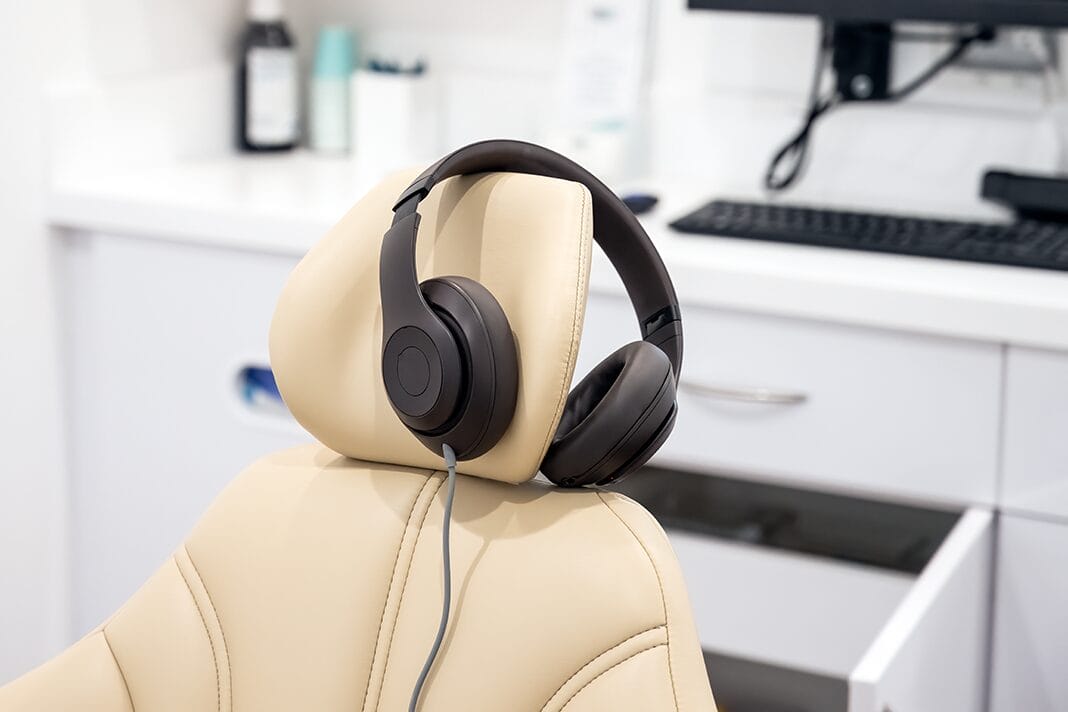
If offices are set up with a more open-concept floor plan and music can’t be contained to one operatory without spilling into the next room, one option is to use Bluetooth headphones. To ensure proper infection control, use barriers and disinfect headphones between patients.
In Closing
Patients who feel cared for on a more individualized and personal level will return and refer. Using a patient-centric approach to reduce stress can increase case acceptance by improving the patient’s overall experience, leading to better patient outcomes. Calmer patients are also easier to treat, reducing stress on the clinical team and allowing for smoother appointments, which helps boost overall office morale.
Music therapy in dentistry is more than background noise. It’s a powerful tool that can be used to build patient rapport, help patients feel more in control of the appointment, personalize and customize for a VIP experience, and help distract from fear and anxiety.
Every patient deserves to feel important and cared for. In a world obsessed with screens, let’s return to the basics and offer a tool that can help reduce stress and create a more pleasant experience for both the clinician and the patient.
Before you leave, check out the Today’s RDH self-study CE courses. All courses are peer-reviewed and non-sponsored to focus solely on high-quality education. Click here now.
Listen to the Today’s RDH Dental Hygiene Podcast Below:
References
- Konneker, E., Singh, D., Tellez, M., et al. A Mixed Methods Exploration of the Origin of Dental Anxiety and Coping Strategies among Participants in a Behavioral Intervention for Dental Anxiety. Front Oral Health. 2025; 6: 1589764. https://pmc.ncbi.nlm.nih.gov/articles/PMC12198210/
- Hoffmann, B., Erwood, K., Ncomanzi, S., et al. Management Strategies for Adult Patients with Dental Anxiety in the Dental Clinic: A Systematic Review. Aust Dent J. 2022; 67 Suppl 1(Suppl 1): S3-S13. https://pmc.ncbi.nlm.nih.gov/articles/PMC9796536/
- McArthur, V., Everington, S., Patel, M. Effectiveness of Music-Based Interventions in Acute Care Settings for People Living with Dementia to Reduce Anxiety and Enhance the Care Experience: A Systematic Review. Arch Gerontol Geriatr Plus. 2024; 1(4): 100087. https://www.sciencedirect.com/science/article/pii/S2950307824000845