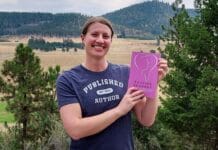

One of my favorite parts of attending conferences is having the opportunity to meet fellow hygienists across the country. Taking a last-minute course one day led to a wonderful surprise – meeting Enid Randall, RDH. The conversation at our table was refreshing, eye-opening, and truly enjoyable.
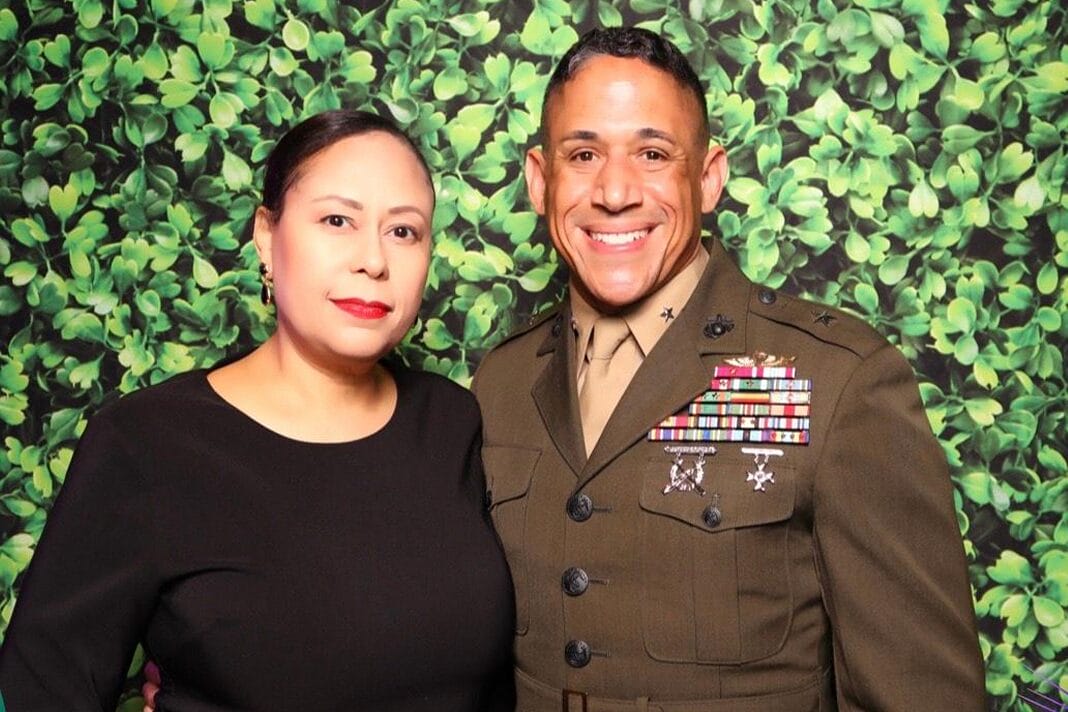
Enid Randall was a dental assistant for 10 years before becoming a hygienist in 2008, working throughout the country and even abroad. Her husband, Omar, has served since 1996 and is a brigadier general in the United States Marine Corps. As a military family, they usually move every two to three years to a new duty station.
Intrigued by Enid Randall’s story as a military spouse, I was curious to learn more about her professional experiences, her time working in different places, and the process of relocating as a hygienist.
Meet Enid Randall
Machado: What inspired you to transition from dental assisting to hygiene, and where did you complete the dental hygiene program?
Randall: After working as a registered and certified dental assistant, I moved into expanded functions. I consider myself a lifelong learner, so becoming a dental hygienist felt like the natural next step.
Because we were stationed at Camp Lejeune at the time, I attended the hygiene program at Coastal Carolina Community College in North Carolina. I also later earned a bachelor’s degree in healthcare management from Southern Illinois University.
Machado: What is your favorite aspect of being a dental hygienist?
Randall: I enjoy developing a rapport with my patients and earning their trust. Since many people don’t enjoy visiting the dental office, I’m happy to make their experience better than they expected. I also find it rewarding to help patients achieve optimal oral health. I love to see a case where a complete turnaround happens, and the patient finally knows how to keep themselves healthy.
Life on a Military Base
Machado: How does the process of being stationed in different locations work, and what is on base?
Randall: The military gives us orders on where we will be stationed, generally for two to three years at a time, but some orders can be much shorter.
A base is an installation that shelters a country’s armed forces equipment and personnel and facilitates training and operations. They can be located throughout the United States, and some are overseas. Depending on the location, some bases are like cities and even have their own schools, restaurants, movie theaters, post offices, pools, and shopping facilities.
Machado: Can you describe the experience of living on a military base?
Randall: I love the safety of living on a base since the majority are secured by armed guards, and you must show a military ID to get inside. Otherwise, living on a base is similar to living in a civilian town, except all your neighbors are military. I feel that you get to know your neighbors better on a base, and the children are freer to roam around and play.
Machado: Where was your favorite place to be stationed and why?
Randall: My favorite duty station has been Okinawa, Japan. We were stationed there twice – once for two years, and again for four years. I love everything about that little island. The people are kind, the food is incredible, and the travel opportunities throughout Asia are amazing. I have been stationed in many places, but Okinawa will always be in my heart!
Machado: Were there any observations that stood out to you when working in different places around the world?
Randall: Yes! Some places have no fluoride in their public water, yet have a very low incidence of caries due to differences in diet and customs. For example, while visiting Korea and eating at a restaurant, I noticed people brushing their teeth in public restrooms after their meals. It is also very common there to carry oral care products and brush while at school, at work, or even when out and about.
Machado: How do you find a job on a military base?
Randall: The easiest way to find a job on a military base is through usajobs.gov, although contractors also post jobs on base. You don’t have to be military-related to work on base, but veterans and military spouses do get preference.
Machado: Can you describe what a dental office on base looks like? Are there differences from civilian practice?
Randall: On base, a dental clinic can be a standalone or inside a military hospital. A dental office looks exactly like what you would find in a regular civilian dental office. Working on base is similar to civilian practice, except your patients are in the military, so there is no pressure to “produce.”
The patients receive the services they need, but the main goal is to ensure service members are “deployment ready” by keeping them up to date on exams, radiographs, and any necessary treatment. The staff are mostly military, including military-trained hygienists, although some civilians will also work there.
You don’t have to deal with insurance, which I never realized could be so freeing. It’s also nice having the instruments and things you need – I always had nice, sharp instruments. For the most part, the patients were pleasant and respectful, and I felt very appreciated. Patients very seldom no-showed because they could get in trouble for it, and if they arrived late, they were rescheduled so they were always on time.
Unfortunately, the pay structure needs to be improved because it’s considerably lower on military bases. On the upside, the benefits are excellent compared to civilian practice. Some take the pay cut because of the many benefits.
Some of the benefits include medical, dental, and vision coverage, paid federal holidays, sick days, time off for jury duty, and continuing education is paid for. When I worked on base, three days out of the week, we had an hour to work out, which was paid! If I needed to take earned time off, it would not be as much of a hassle as it is in civilian practice. So, in general, I felt way less stressed.
Licensing Challenges and Portability
Machado: What challenges or struggles have you faced as a hygienist from moving across states or countries regularly?
Randall: Moving frequently has been such a struggle because the process and requirements for obtaining a dental hygiene license vary from state to state. In some instances, I had to re-take clinical boards, which was expensive and time-consuming. This also leads to struggles in getting a job in a timely fashion, often resulting in financial loss. I have become an expert board taker!
It is also not uncommon to repeat duty stations, meaning I must keep several state licenses active simultaneously, which becomes expensive. I am glad to see the Dentist and Dental Hygienist Interstate Compact, which aims to help with license portability for all hygienists. Hopefully, states will continue to join.
Another challenge is that not many jobs are open on base, and there may be instances when no jobs are available if the few existing dental hygiene jobs are already filled. For example, I was the only hygienist when I worked at the dental clinic at what was then known as Fort Belvoir Community Hospital, a military hospital in Virginia. Military spouse unemployment is a real issue, even though military spouses are generally very educated.
If you are stationed overseas, you sometimes have no choice but to work on base due to a lack of qualifications to work out in town. In other countries, like Japan, I could not even attempt to work as a hygienist outside the base because I would have to pass their exams and be fluent in Japanese.
Machado: Why is it important to have dental hygiene license portability?
Randall: In general, license portability is important because it enables hygienists to move easily across the country, which can increase access to care for patients. We keep hearing that there is a shortage of hygienists, so it may also help alleviate that issue.

For military spouses, it is a must with the frequency of our moves. The unemployment rate among military spouses is five times the national average, contributing to declining active-duty retention rates. License portability will help with the unemployment issues for military spouses who are dental hygienists.
Machado: Have the differing continuing education credit requirements or scope of practice from state to state been a challenge?
Randall: Surprisingly, no, continuing education credit requirements have not been an issue. The hours I acquire generally apply to each state, though I always take more courses than necessary since some states require more credits than others. The only real problem is if a state requires live, in-person CEs, which can be difficult depending on your location.
The biggest challenge is moving from a state where I can perform certain functions – like administering local anesthesia – to a state where that isn’t an allowable function. I feel we need greater equality across state lines, especially regarding the scope of practice.
Advice and Final Thoughts
Machado: Do you have any advice for hygienists who are military spouses or those whose spouses are considering a military career?
Randall: If your spouse intends to make a career out of the military, it is very likely you will repeat a duty station, so keep all of your licenses active – don’t let them lapse! Also, be prepared for the active-duty member to be gone for extended periods. Between deployments, exercises, and training, you may often handle all household responsibilities alone.
There are ebbs and flows to this lifestyle. If you find yourself in a place where you can’t work as a hygienist, don’t worry! Use that time to fill employment gaps by volunteering, subbing at your child’s school, or taking online courses. Work will always be there when you get back. I’ve had opportunities I never would have had otherwise, like serving as the president of a nonprofit, sitting on various boards, volunteering with my spouse’s command, traveling to other countries, and helping to improve things for upcoming and future military spouses.
Machado: Is there anything else you would like to add?
Randall: Being a military spouse has not been easy, but I wouldn’t have it any other way. I’ve had amazing experiences and met amazing people. However, there is still much to improve in our profession. One way to do that is by joining the ADHA to ensure our interests are represented in legislation and public policy.
In Closing
Before meeting Enid, I didn’t know many details about the military, especially the balance of being a military spouse as a hygienist. Learning about her experiences on and off base is a great reminder of how unique our profession is. Despite our different settings, we share the same goal – to care, educate, and prevent disease. Enid’s experiences also show the importance and need for license portability.
Before you leave, check out the Today’s RDH self-study CE courses. All courses are peer-reviewed and non-sponsored to focus solely on high-quality education. Click here now.