
While the concept of polishing was noted in Roman and Greek writings, it was Pierre Fauchard, the father of modern dentistry, who first introduced the practice for the removal of dental stains. Interestingly, Fauchard used materials such as finely ground coral, eggshells, ginger, or salt. As dental polishing techniques evolved over time, it was observed that stains were not the etiological factor in disease, making stain removal an esthetic concern rather than a health concern. This led Dr. Esther Wilkins to introduce the concept of selective polishing – the practice of only polishing surfaces with visible extrinsic stains.1
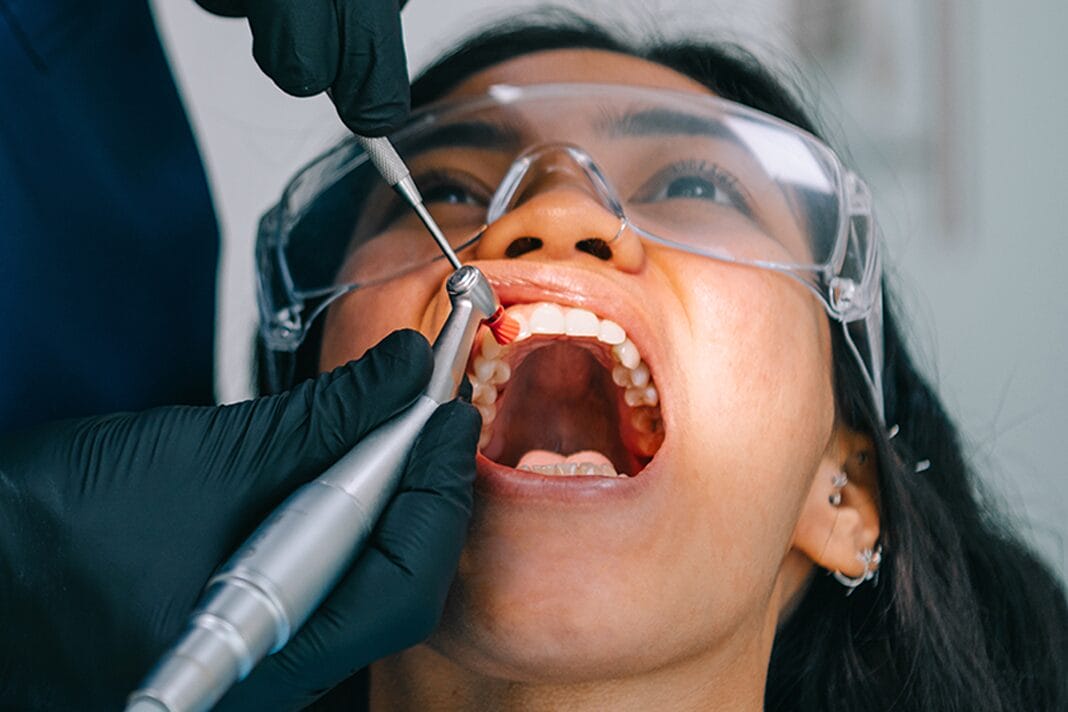
Selective polishing is more than simply “only polishing areas of stain.” It involves the selection of appropriate polishing or cleansing agents and techniques to achieve a surface that reduces biofilm deposition.2,3 Polishing agents are abrasive, irregularly shaped particles with sharp edges used to remove extrinsic stains and leave the enamel smooth and shiny. If a polishing agent is chosen over a cleansing agent, the polishing process should progress from coarse abrasion to fine abrasion. Unlike polishing agents, cleansing agents are round, flat, nonabrasive particles that do not scratch surface material. Despite being nonabrasive, they produce a higher luster than polishing agents.3
Polishing and Cleansing Agent Considerations
I have found that either patients love polishing or dislike it. For me, I love it, especially when I was growing up. I always chose chocolate chip cookie dough prophy paste. This love influenced me to enter the dental field. To some patients, polishing or cleansing agents are just fancy toothpaste. Some patients even think coronal polishing is their “cleaning.” Not all polishing or cleansing agents are the same, and there is much to consider based on specific patient needs.
Taste
Obviously, this is a huge one. The mint family has run the polishing game for decades. However, there are other flavors out there, and manufacturers are becoming increasingly creative, offering flavors such as pina colada, sugar cookie, grape, and vanilla cupcake. These alternative flavors are not just for children – they are for everyone. Some patients simply do not like mint.
Patient Sensitivities and Allergies to Ingredients
Beyond taste preferences, some patients may have sensitivities or allergies to certain flavors, such as mint or fruit flavors. Nut and milk protein allergies can be an additional concern, as reactions can be very serious and, in some individuals, induce anaphylaxis. Allergic responses to dyes and other additives can also cause a range of reactions from contact dermatitis to anaphylaxis. Further, patients with gluten sensitivities or celiac disease require gluten-free options to avoid adverse reactions. It is essential to review medical history and document all sensitivities and allergens – even those associated with foods – to ensure patient safety.4

Particle Size (Grit)
Polishing agents’ particle size, or grit, is not one-size-fits-all. There are many different grits of polishing agents, including extra fine, fine, medium, coarse, and extra coarse. Pumice is the primary ingredient in commercially prepared prophy paste, but it’s also available on its own as powdered pumice in different grits.3
Clinicians should use the least abrasive grit possible to minimize the removal of tooth surface. However, if a patient has heavier staining, such as coffee or tobacco stain, a coarser grit option would aid in stain removal alongside instrumentation. When starting with coarse grit, follow the progression to fine grit to eliminate scratches on the enamel or restorative material. Surfaces with excessive abrasion due to coarse polishing paste are more prone to extrinsic stain reformation and biofilm retention.3
In cases where no extrinsic stain is present, cleansing agents should be used instead of polishing agents. Cleansing agents are powders that are mixed with water to make a paste or slurry for polishing. Some examples include feldspar and sodium-aluminum silicate.3
Therapeutic Additives
Generally, coronal polishing is not considered a therapeutic procedure, as stain removal is an esthetic concern. However, some polishing and cleansing agents have additional ingredients, making polishing more therapeutic in nature.3
For example, the addition of fluoride or fluoride and amorphous calcium phosphate (ACP) may help reduce dentinal hypersensitivity and aid remineralization. However, it should be noted that polishing with an agent that contains fluoride and/or ACP is not a substitute for fluoride varnish treatment.3
Polishing Contraindications
There are some contraindications to polishing, and circumstances in which a cleansing agent should be chosen over a polishing agent. Areas of demineralized white spots should not be polished, as it removes more surface enamel and can interrupt remineralization. Polishing is also contraindicated in enamel hypoplasia, amelogenesis imperfecta, hypomineralized areas, and areas with exposed dentin or cementum.3
Dental restorative materials and implants present another challenge, as abrasive polishing agents may create scratches in some materials. Choosing the appropriate agent depends on the material type, so it is best to follow the manufacturer’s recommendation if available. A cleansing agent, polishing paste specifically formulated for esthetic restorations, or the paste recommended by the manufacturer of the restorative material, should be used on tooth-colored restorations.3
The effect on gingival tissues and the healing process following nonsurgical periodontal therapy (NSPT) should also be considered. It’s often better to postpone stain removal to allow the sulcular tissue to heal. If polishing is required, it can be performed during the re-evaluation appointment (e.g., 4–6 weeks following NSPT).3
Other Considerations
Deciding when to polish and prophy angle and handpiece choice are other polishing considerations. Another consideration is polishing techniques, such as using a traditional rubber cup or air polishing.

When to Polish
Are you polishing before or after instrumentation? Though this may seem like a personal decision, it is important to understand that polishing with a polishing agent is strictly meant to remove stain – not biofilm – and to create a smooth surface resistant to biofilm accumulation. For initial biofilm removal, ultrasonic instrumentation is often a more effective choice.3
Prophy Angles
Like prophy pastes, there are many options for prophy angles, including disposable, disposable with an abrasive-impregnated rubber cup, and stainless steel. The body design can be right-angle or contra-angle. Contra-angles have a wider angle between the shank and the rubber cup and may have longer shanks, which provide better access to posterior teeth and surfaces.3
Rubber polishing cups come in various sizes, firmness, internal design, and with or without ribbing. Beyond rubber cups, bristle brushes and rubber polishing points are also options. Bristle brushes remove stains from deep pits and fissures. They can be used on tooth surfaces away from the gingival margin but are contraindicated for use on exposed cementum or dentin. Rubber polishing points are flexible, allowing easy adaptation of the tip to a variety of surfaces, including proximal surfaces, embrasures, and around orthodontic brackets and bands.3
Handpieces
Think about your handpieces: Are they ergonomically designed? Ideally, they should be small, lightweight, maneuverable, and well-suited for the size of your hand to allow for a functional light grasp. Are they corded or cordless? If corded, is the cord too short or causing drag, increasing the risk of repetitive injury? Just like our instruments, handpieces should be balanced and within easy reach to avoid strain, muscle imbalances, and fatigue.5
Air Polishing
An alternative to rubber cup polishing is air polishing, which uses air, water, and specifically formulated powders to deliver a controlled spray to remove stain (and biofilm). This technique is typically more time-efficient and can reach inaccessible areas that traditional rubber cup polishing cannot. Air polishing also generates no heat and is considered more ergonomically friendly. Conversely, air polishing requires additional precautions to manage aerosols, such as using high-volume evacuation (HVE).2,3
In Closing
A good way to start integrating new and different polishing and cleansing agents is by requesting samples from manufacturers. Often, this can be done simply by visiting the manufacturer’s website or reaching out to customer service. Your office’s dental supply rep may have also samples on hand. Test-driving different product options enables you to find what works best for you. Your patients can also give you valuable feedback.
Whichever specific products and polishing technique you choose, remember it is not a one-size-fits-all model. Not all polishing or cleansing agents are the same, and there is much to consider based on specific patient needs.
Before you leave, check out the Today’s RDH self-study CE courses. All courses are peer-reviewed and non-sponsored to focus solely on high-quality education. Click here now.
Listen to the Today’s RDH Dental Hygiene Podcast Below:
References
- Sawai, M.A., Bhardwaj, A., Jafri, Z., et al. Tooth Polishing: The Current Status. Journal of Indian Society of Periodontology. 2015; 19(4): 375-380. https://www.ncbi.nlm.nih.gov/pmc/articles/PMC4555792/
- Tungare, S., Paranjpe, A.G. Teeth Polishing. (2022, September 26). StatPearls. https://www.ncbi.nlm.nih.gov/books/NBK513328/
- Doucette, H., & Boyd, L. D. (2023). Extrinsic Stain Removal. In L. D. Boyd & L. F. Mallonee, Wilkins’ Clinical Practice of the Dental Hygienist (14th ed., pp. 787-804). Jones & Bartlett Learning.
- Coimbra, L., Costa, I.M., Evangelista, J.G., Figueiredo, A. Food Allergens in Oral Care Products. Sci Rep. 2023; 13(1): 6684. https://pmc.ncbi.nlm.nih.gov/articles/PMC10126110/
- Smilyanski, I. (2023). Patient Reception and Ergonomic Practice. In L. D. Boyd & L. F. Mallonee, Wilkins’ Clinical Practice of the Dental Hygienist (14th ed., pp. 121-132). Jones & Bartlett Learning.