

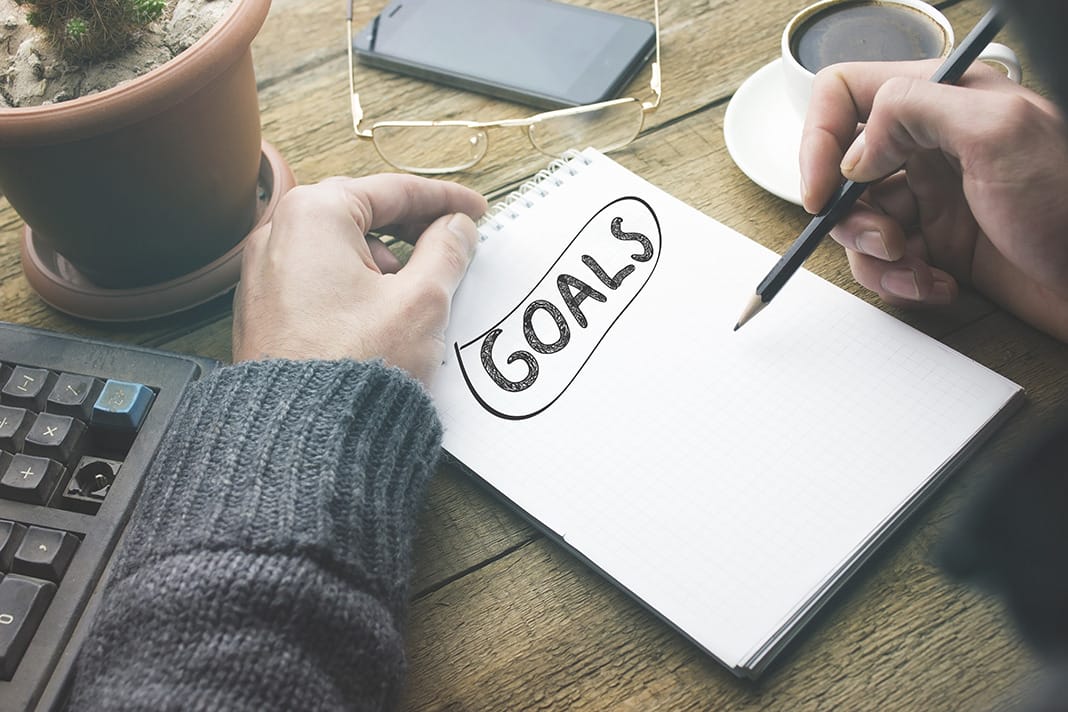
The clock strikes twelve on New Year’s Eve, and magically, we are meant to be changed, living by a new set of rules that promise a life as an improved human. This set of self-inflicted rules is often unattainable or overwhelming. A new year brings a fresh perspective and the opportunity for 12 glorious chapters of different or better decisions for health, work, priorities, and relationships.
As we enter into this new year, many of us are on full throttle towards accomplishing resolutions. We go to bed with high hopes for the next day of treadmill running and healthy eating. “This is the year that I can make it all happen. This year will be different.” As the first several weeks of the new year quickly pass, why does it often seem this fresh motivation deflates, and suddenly, we fall back into old habits?

Implementation Intentions
Dental professionals seem to bring a certain level of drive to the table that keeps us teetering between perfectionistic habits and achieving our goals. This drive shows up in the operatory and personal lives. We often push ourselves to achieve an unrealistic perfection, which leaves us paralyzed by procrastination. The motivation and drive to maintain a new standard or behavior can quickly fizzle, and waiting around for its return can be frustrating and disappointing.
Motivation may have little to do with carrying out New Year’s resolutions or any other newly sought-after behavior or habit. Keeping promises to ourselves boils down to planning and strategizing more than waiting for motivation to strike. Though several life factors can make it challenging to live out resolutions, a simple goal-directing task may keep you on track toward your desired transformations.
One evidence-backed habit-building tactic is called implementation intentions. This is where you identify “if-then” plans that define when and where your actions will take place in order to propel you toward the finish line.
The idea of implementation intentions was first introduced into psychology in the late 1980s and 1990s by Dr. Peter Gollwitzer. He notes that “good intentions have a bad reputation” because people often fail to act on them when they aren’t backed by a specific plan.1 By creating a structure such as “If situation X arises, then I will do Y,” nonbinding desires can be transformed into a committed contract with oneself. What seems like a simple task of writing down when and where an activity will be carried out strongly impacts the outcome.1
A systematic review and meta-analysis found that implementation intention interventions were associated with higher physical activity levels compared with control groups. Interventions that incorporated action planning, defined as identifying when and where physical activity would occur, were more frequently associated with positive outcomes.2
A Trainer’s Focus on Bite-Sized Steps
Danielle Shearon, SFG, SFB, is Precision Nutrition certified, a strength/fitness trainer for StrongFirst, and the owner of Prevail Strength and Fitness in Edmond, Oklahoma. She states that motivation is misunderstood. It comes in waves, and if we wait around for motivation to strike, we may fail to start or quickly give up the new behavior.3

Shearon often works with clients who find themselves falling off the fitness wagon as soon as that New Year’s spark of motivation begins to flicker. As a trainer with a practical approach to wellness, she has found that after setting end-game goals with clients, breaking them down into bite-sized steps keeps them focused.3
“When clients have a zero-to-hero approach or look ahead too far into the future, they lose sight of where they are going,” Shearon says. “Sean (her husband) and I want to offer realistic, attainable, and sustainable goals that keep people moving. If they can step foot into the gym today, goal accomplished. We don’t recommend waiting around for motivation to climb the mountain. Maybe today, just putting on their shoes and walking through the doors was all they had. We honor and celebrate that. You have to take one step at a time to get up the mountain. Instead of all or none, we encourage forward progress even if it is only 1%, 10%, or 20% improvement.”3
When I asked about her thoughts on implementation intentions, Shearon said she believes they are absolutely necessary for success. “It may feel impossible to say that I am going to lose 40 pounds,” she says, “but it feels doable to say I am going to walk one mile today at 5 pm. This attitude leaves us with a win for the day and maybe even motivation for tomorrow in the tank.”3

Establishing Your Intentions
Whether you have your eye on a personal weight loss goal, want to increase your daily hygiene production, or practice better self-care during the workday, implementation intentions can help you inch toward success. Here is how it works:
- Identify your overarching goal and write it down: For example, “This year, I will take better care of myself during the workday.”
- Clarify what that goal means: This may include drinking more water between patients, stopping to use the restroom more often, or eating lunch and snacks during the workday.
- Quantify your planned actions: Dissect these goals even further. For example, “I will drink 80 ounces of water each day,” “I will use the restroom after every third patient,” or “I will prepare my lunches for the week ahead of time.”
- Create your implementation intentions: Identify and journal the time and place these new habits will take place. For example, you may write, “I will keep two liter-sized bottles of water in my cabinet and drink each time I finish turning my operatory.” This gives you a specific time and place to achieve this goal.
You have now set your intentions and made this goal attainable. You no longer need to feel “motivated” to drink water all day – you simply need to fill the bottles and carry out your intention. At the end of the workday, you will be well on your way to 80 ounces of water. The new habit starts with filling the water bottles. Once you have taken that step, your brain is primed for action.
In Closing
As you look at your goals for the new year, consider how you can incorporate implementation intentions to specifically define the when and where of the activity. Take the time for this simple act of self-care as you embark on new adventures in behavior change and self-improvement.
Before you leave, check out the Today’s RDH self-study CE courses. All courses are peer-reviewed and non-sponsored to focus solely on pure education. Click here now.
Listen to the Today’s RDH Dental Hygiene Podcast Below:
References
- Gollwitzer, P.M. Implementation Intentions: Strong Effects of Simple Plans. American Psychologist. 1999; 54(7): 493-503. https://www.prospectivepsych.org/sites/default/files/pictures/Gollwitzer_Implementation-intentions-1999.pdf
- Peng, S., Othman, A.T., Khairani, A.Z., et al. Meta-Analysis of Implementation Intentions Interventions in Promoting Physical Activity among University Students. Sustainability. 2023; 15(16): 12457. https://www.mdpi.com/2071-1050/15/16/12457
- Shearon, D. (2021). Personal Interview. Prevail Fitness, Edmond, OK.