
Dental caries is the most prevalent noncommunicable disease worldwide. The National Institute of Dental and Craniofacial Research estimates that 50% of United States children aged 6 to 8 years have experienced dental caries, with rates surging to over 70% in some racial and ethnic minorities. This disparity underscores the urgent need for accessible, community-based interventions.1
To address this disparity and reduce the burden of caries, the World Health Organization Global Oral Health Action Plan named oral disease prevention a primary strategic objective. This plan recommends using cost-effective, community-based methods to prevent dental caries. The World Health Organization (WHO) added glass ionomer sealants and silver diamine fluoride (SDF) to its Model List of Essential Medicines in 2022. These therapies are a central focus of community-based dental caries prevention efforts.1
Despite WHO guidance, access to oral disease prevention remains a persistent challenge in the United States, with more than 69 million people living in areas with a shortage of dental professionals. While the Centers for Disease Control and Prevention (CDC) recommends school sealant programs to improve health equity, the high cost limits their widespread use. SDF application offers a potentially cost-effective and time-saving alternative. Much like traditional dental sealants, it prevents and arrests existing caries, earning it U.S. FDA “breakthrough therapy status” in 2017.1
To address this access gap and better assess SDF as a potential cost-effective alternative, the randomized clinical trial titled, “The Silver Diamine Fluoride Versus Therapeutic Sealants for the Arrest and Prevention of Dental Caries in Low-Income Minority Children (CariedAway),” investigated the effectiveness of SDF compared to dental sealants for community-based caries prevention and control programs.1
The Study
The primary clinical outcomes for this trial included the noninferiority of SDF compared to dental sealants and atraumatic restoration treatment (ART) for the 2-year arrest of existing dental caries and the 4-year prevalence of caries. The study used a noninferiority margin of 0.10, meaning that SDF was considered effective if its success rate was no more than 10% lower than that of the control group. This report focuses on the cumulative incidence and prevalence of dental caries over 4 years.1
This trial was a longitudinal noninferiority pragmatic cluster-randomized clinical trial that ran from February 1, 2019, to June 1, 2023. The trial enrolled 7,418 participants with a mean age of 7.58 years (54% female) across 48 schools in New York City’s metropolitan area. The study focused on underserved populations: schools were required to have at least 50% Black or Hispanic students and 80% receiving free or reduced lunch.1
Students and/or schools were excluded if the school had a preexisting oral health program, or the student did not speak English. Overall, 4,100 participants (55.5%) completed at least 1 follow-up observation. Due to school closures from COVID-19, which caused a follow-up delay of approximately 2 years, a restricted subsample of participants was also analyzed to ensure consistent follow-up time. Of the 4,718 enrolled in the six months prior to the closures, 2,998 were viable for follow-up after the pandemic restrictions were lifted, with 1,831 completing the final follow-up.1
The participants’ demographics reflected the inclusion criteria: the study population was primarily composed of self-reported Hispanic (49.2%) and Black (16.8%) students. The study population also included Asian (1.7%), White (2.1%), multiple races or ethnicities (1.5%), and other/unspecified (1.2%), with 27.5% of participants not reporting their race or ethnicity.1
Interventions included an experimental treatment group using a 38% SDF solution and an active control group using glass ionomer sealants and atraumatic restorative treatment (ART). ART is a minimally invasive approach that includes both preventative and restorative components to halt the progression of dental caries. All participants also received a 5% sodium fluoride varnish application.1
Dental caries was identified through a complete visual and tactile oral exam using a modified version of the International Caries Detection and Assessment System (ICDAS) for research and public health settings. Each tooth surface was classified as intact/sound, sealed, restored, decayed, or with arrested decay. Dental caries was defined as lesions rated a 5 (distinct carious lesion with visible dentin) or 6 (extensive carious lesion with more than half the surface with visible dentin) on the ICDAS scale, showing clear signs of decay. Any new restorations identified on teeth previously marked as healthy at follow-up were counted as new dental caries.1
Before treatment, demographic information such as sex, race, and ethnicity was collected through self-reporting. This data was gathered to help analyze potential differences in outcomes among various sociodemographic groups. Race and ethnicity categories were based on classifications from the New York City Department of Education, and anyone who didn’t fit into a listed category was recorded as “other.”1
Using a random number generator, schools were randomly assigned to either the experimental or control group. Because SDF can cause visible staining, participants could tell which group they were in. Clinicians were not blinded due to the different procedures in each treatment, but they could not tell which provider had treated each child in previous visits.1
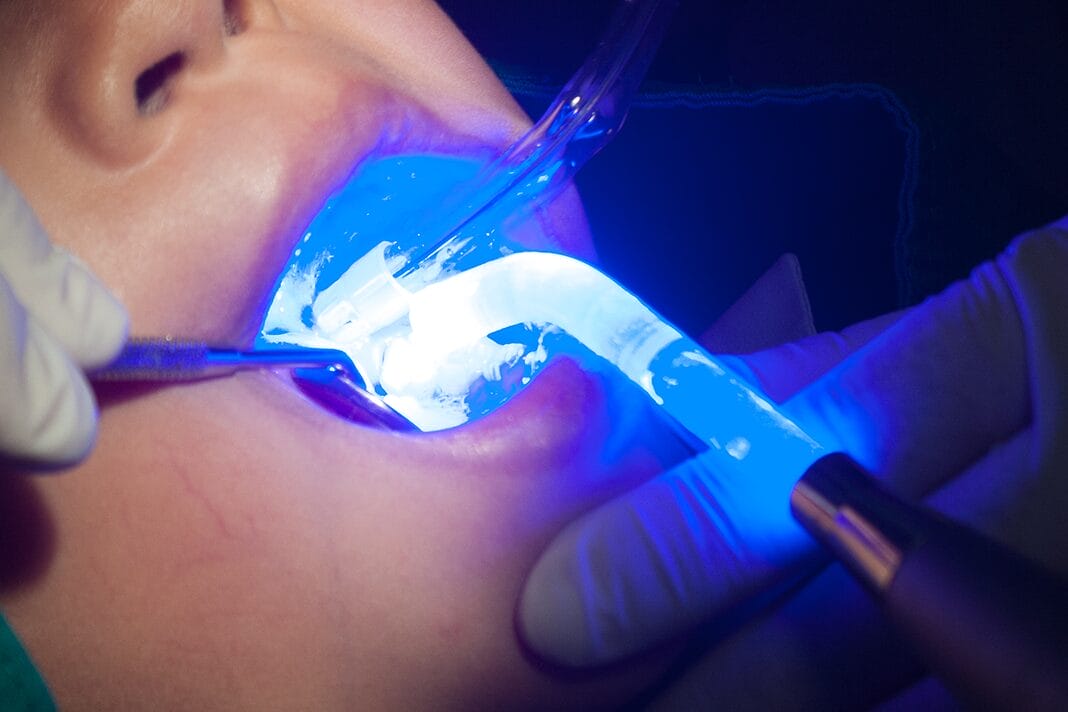
In the SDF (experimental treatment) group, petroleum jelly was applied to the lips and surrounding skin to prevent temporary staining. Gauze and cotton rolls were used to isolate the teeth being treated. One to 2 drops of SDF were placed in a mixing well and applied with a micro applicator to all posterior asymptomatic cavitated lesions and to the pits and fissures of premolars and molars. The SDF was agitated and applied using a scrubbing motion onto the surfaces for at least 30 seconds, then allowed to air dry for 60 seconds. Afterward, fluoride varnish was applied to all teeth to help mask the taste of the SDF. This process was repeated every 6 months, except during interruptions caused by the COVID-19 pandemic.1
In the glass ionomer sealant and ART (active control) group, a cavity conditioner was applied to the pits and fissures of premolars and molars for 10 seconds. Sealant capsules were mixed and applied using a finger-sweep technique, ensuring the sealant had closed margins. Atraumatic restorations were placed in teeth with asymptomatic cavitated lesions, and fluoride varnish was applied to all teeth. At follow-up visits, sealants were reapplied to teeth where the sealant had failed or partially failed to be retained.1
The SDF group was treated by either a registered dental hygienist or a registered nurse. The sealant/ART group was treated exclusively by a registered dental hygienist. Training prior to the trial was provided to registered dental hygienists and registered nurses, including screening, treatment protocol standardization exercises, and mock patient interactions. Both treatment groups received care in designated rooms at each school using mobile dental equipment, and treatments continued for as long as the child was part of the study.1
The Results
The results showed that SDF combined with fluoride varnish was noninferior and similar in effectiveness to dental sealants/ART and fluoride varnish in preventing dental caries over 4 years. Although the study experienced a significant delay due to the COVID-19 pandemic, the final number of participants was large enough to ensure the results were reliable and that a meaningful conclusion could be reached.1
Throughout the trial, the SDF experimental treatment group and the sealant/ART active control group also had similar results on the incidence of new carious lesions. On average, the SDF group had a slightly higher incidence rate of 10.2 caries per 1,000 tooth-years compared to the sealant/ART group’s rate of 9.8 caries per 1,000 tooth-years. However, the difference was determined to be insignificant and noninferior. From adjusted models for longitudinal caries incidence, the risk comparing the sealant/ART group to the SDF group was 0.92 (95% CI, 0.83–1.04), further confirming that neither treatment was significantly different.1
Further, over time, both groups showed a steady decline in the incidence of new carious lesions. On average, the odds of untreated decay significantly decreased by approximately 21% at each observational visit. Additionally, the results showed that SDF worked just as well, whether a registered dental hygienist or a registered nurse applied it.1
Limitations
This pragmatic or real-world trial had some limitations. For example, the participant dropout rate, the possibility of children receiving dental care outside the program, and the interruptions in treatment due to the COVID-19 pandemic were all notable limitations. Researchers used all available data to address this and focused on a group with similar follow-up opportunities. They also examined whether children had dental caries at the start, a step rarely taken in similar studies. Multiple prevention assessments were included, such as the incidence of dental caries, overall prevalence, and how long it took to develop new dental caries. These estimates were considered at both the tooth and individual levels. While participant dropout is a limitation, the study reflects how a school-based program using SDF might work in everyday situations.1
Conclusion
This clinical trial provides evidence that SDF is useful for halting dental caries progression and helps prevent the development of new dental caries. Previous research shows that when SDF is used on existing dental caries, it can protect nearby healthy teeth from developing dental caries. Evidence indicates it works better than fluoride varnish for young children. However, in past studies, results with SDF compared to other treatments, such as glass ionomer sealants or ART, have been mixed, and most studies have only tracked results for 1–2 years.1
Nearly 1 in 4 children (26.7%) had untreated dental caries, and 11% had preexisting sealants at the start of this trial. After treatment, the risk of developing new dental caries decreased by about 20% for both groups. The number of new dental caries was nearly identical in both groups, indicating that SDF is as effective as other treatments in preventing dental caries. Sealants are known to prevent a significant number of dental caries, and this study suggests SDF may be equally effective.1
The collected data showed no differences between treatments regarding the time to the first carious lesion or the overall number of new lesions developed. Though some studies suggest the presence of untreated dental caries increases the risk of developing future dental caries, in this clinical trial, there wasn’t enough evidence to say if the effectiveness of treatment changes over time or depends on whether a child had dental caries at the start.1
Additional benefits are that SDF is both cost-effective and saves time. Applying SDF to a tooth takes significantly less time than applying sealants, allowing more children to be treated quickly. SDF can reduce Medicaid costs and is the most affordable choice for high-risk groups. It is also more cost-efficient compared to ART.1
In 2022, the American Medical Association approved a new category III Current Procedural Terminology code allowing non-dental professionals like nurses and doctors to apply SDF. It’s now being used in pediatric clinics and by school nurses, with promising results. A 5th of the participants in the SDF group (20.5%) were treated by registered nurses at baseline, and their outcomes were not significantly different from those treated by dental hygienists. Overall, registered nurses provided 13.5% of the total individual participant encounters in the SDF arm of the trial. Dental hygienists partnering with school nurses in caries prevention could help reach more children and improve oral health in schools.1
Side effects associated with SDF are limited and include oral soft tissue irritation, temporary oral mucosa staining, and permanent porous tooth structure staining. Out of thousands of treatments, no adverse events were reported, and only one complaint was made regarding a superficial skin stain. The parent thought the skin stain was bruising, which prompted the complaint. Prior research indicates most parents were happy with how their child’s teeth appeared despite staining, especially since aesthetic concerns are mitigated by posterior application, where the staining is less visible.1
Untreated dental caries has maintained its position at the top of the global disease prevalence lists for 30 years. This clinical trial shows that SDF is a powerful, practical solution, especially in schools. It gives health providers a simple tool to help close the gap and improve equity in oral health care for children everywhere.1
Before you leave, check out the Today’s RDH self-study CE courses. All courses are peer-reviewed and non-sponsored to focus solely on high-quality education. Click here now.
Listen to the Today’s RDH Dental Hygiene Podcast Below:
Reference
1. Ruff, R.R., Barry Godín, T.J., Niederman, R. Noninferiority of Silver Diamine Fluoride vs Sealants for Reducing Dental Caries Prevalence and Incidence: A Randomized Clinical Trial. JAMA Pediatr. 2024; 178(4): 354-361. https://pmc.ncbi.nlm.nih.gov/articles/PMC10913007/