
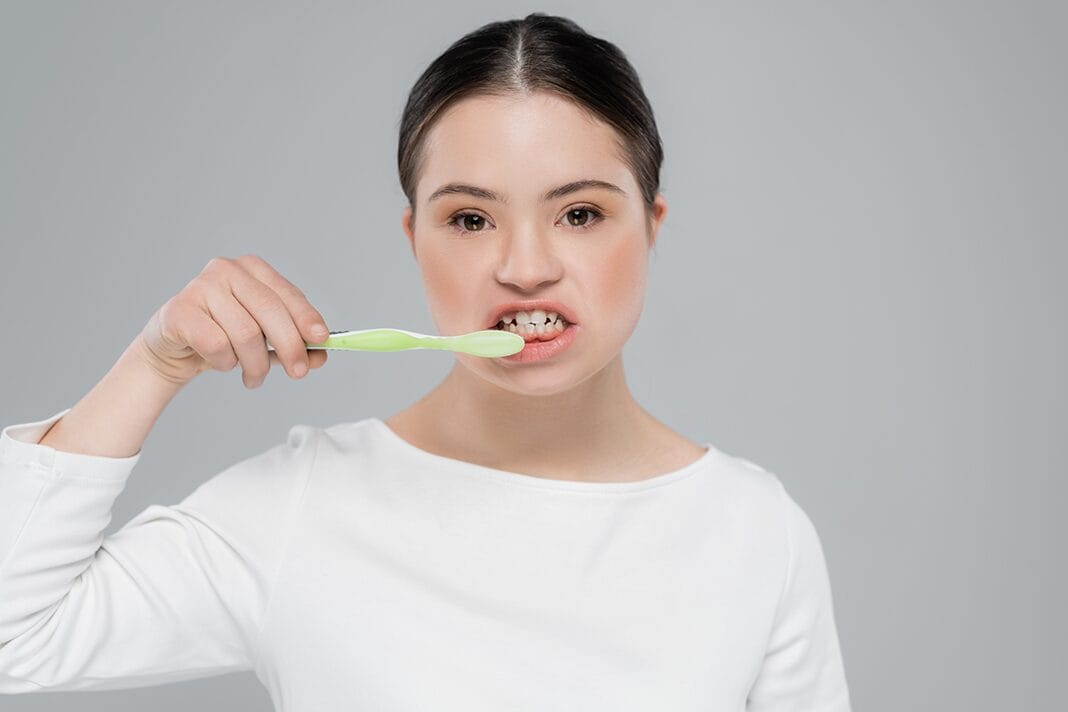
Down syndrome is a genetic condition caused by an extra copy of chromosome 21. It can result in a range of cognitive and developmental delays, which may contribute to difficulties maintaining good oral health. Often experiencing motor function challenges such as low muscle tone and weak hand grip, children and adolescents with Down syndrome may also present with various dental anomalies, including delayed tooth eruption, hypodontia, microdontia, and taurodontism. These factors, alongside pseudomacroglossia (an enlarged-appearing tongue due to a small oral cavity) and malocclusion, can make daily oral hygiene more difficult, increasing the risk of dental caries and periodontal disease. Associated systemic conditions can further increase their susceptibility to dental problems.1
To help overcome motor function and dexterity challenges, specific instruction, strong caregiver involvement, and adaptive product designs are especially important for effective oral hygiene. Though there are various ways to manage biofilm, mechanical removal through toothbrushing remains the most efficient method. However, whether using a manual or powered toothbrush, effectiveness depends on proper technique and timing, as well as selecting designs that are comfortable and tailored to the individual’s specific needs.1
To better understand the effectiveness of tailored dental hygiene approaches, a scoping review evaluated the effectiveness of specially designed toothbrushes on oral health outcomes in children and adolescents with Down syndrome.1
The Study
A search across 6 databases (ProQuest, PubMed, EBSCOhost, Scopus, SpringerLink, and ScienceDirect) initially identified 233 studies. After screening against the inclusion criteria, 4 randomized controlled trials were selected for analysis. These studies were published between 2019 and 2023 and focused on participants aged 6 to 18 across multiple geographic locations:
- Syria: Droubi et al. compared customized-handle manual toothbrushes with conventional brushes in 48 participants (ages 6–9). The use of customized handles led to significantly improved daily biofilm removal compared with conventional toothbrushes.
- Saudi Arabia: Fageeh et al. compared 2 special needs manual toothbrushes (Collis Curve 3-sided brush and superfine nano) with conventional toothbrushes in 16 participants (ages 6–15). Both specialized designs reduced biofilm accumulation and bleeding compared to conventional brushes.
- Brazil: Silva et al. evaluated 29 participants (ages 6–14) to compare the effectiveness of electric and manual toothbrushes. While both methods significantly reduced biofilm, no statistical significance was found between the 2 types. Participants showed similar cooperation levels with both types of brushes.
- Italy: Stefanini et al. evaluated 56 participants (ages 6–18) using a digital brush (0.12% chlorhexidine-saturated gauze wrapped around a finger) compared with sterile gauze soaked in water, both in addition to conventional brushing. The use of the digital brush, in addition to brushing, showed a statistically significant reduction in biofilm compared with sterile gauze.1
The Results
The results suggest that a customized, flexible approach is the most effective strategy for improving oral health in children and adolescents with Down syndrome. Matching oral hygiene products to an individual’s specific motor and sensory needs can significantly improve biofilm control and gingival health.1
- Customized vs. conventional handles: Ergonomic toothbrush handles with customized or adjustable grips help address weak hand grip and motor-control challenges, enhancing ease of use.
- Manual vs. electric options: Both manual and electric toothbrushes appear similarly effective. This allows families to prioritize a child’s sensory sensitivities, comfort, and personal preference without compromising hygiene outcomes.
- Specialized designs: Three-sided brushes such as the Collis Curve or superfine nano brushes may provide enhanced biofilm removal. Adjunctive aids such as the digital brush also offer a cost-effective, antibacterial option for those at higher risk of periodontal disease.
- Routine monitoring and caregiver training: Hands-on training builds caregiver confidence in managing the unique oral hygiene needs of this population. Regular professional monitoring further ensures that oral health is consistently evaluated, and care plans are adjusted as needs evolve.1
While the results of these studies align with global research and show that children and adolescents with Down syndrome benefit from individualized oral hygiene approaches, barriers still remain. Research from multiple countries has shown that families report fewer preventive treatments despite frequent dental visits. A lack of tailored oral care guidance, such as specific instructions on brushing techniques, despite high parent involvement, has also been reported.1
Limited resources are an additional reported barrier. In low-resource areas or for families facing service gaps, community-based programs and workshops can help educate, empower, and support caregivers.1
Limitations
The reviewed studies had limitations that should be considered, including small sample sizes, limited study duration, differences in methodologies, potential bias, and manufacturer involvement. Further research is needed to confirm effectiveness and broader applicability.1
A limitation of the scoping review was its primary focus on toothbrushes, though it acknowledges that other oral hygiene products and strategies, such as fluoridated toothpaste, interdental cleaning aids, water flossers, and behavior management techniques, play an important role in improving and maintaining oral health. However, the effectiveness of these additional approaches for children and adolescents with Down syndrome remains under-researched, indicating a need for further studies to determine how best to combine these methods for optimal care.1
Conclusion
While current literature is limited by small sample sizes and varying methodologies, these findings establish a foundation for personalized strategies tailored to the needs of children and adolescents with Down syndrome. Beyond regular dental and dental hygiene appointments, individualized approaches that combine customized toothbrush designs, caregiver education and training, and collaboration between dental professionals and caregivers can help improve oral health in this population.1
Before you leave, check out the Today’s RDH self-study CE courses. All courses are peer-reviewed and non-sponsored to focus solely on high-quality education. Click here now.
Listen to the Today’s RDH Dental Hygiene Podcast Below:
Reference
- Taftazani, R.Z., Sitaresmi, M.N., Hanindriyo, L., Kuswandari, S. Optimizing Oral Hygiene for Children and Adolescents with Down Syndrome: A Scoping Review. Can J Dent Hyg. 2025; 59(2): 133-142. https://pmc.ncbi.nlm.nih.gov/articles/PMC12352597/