

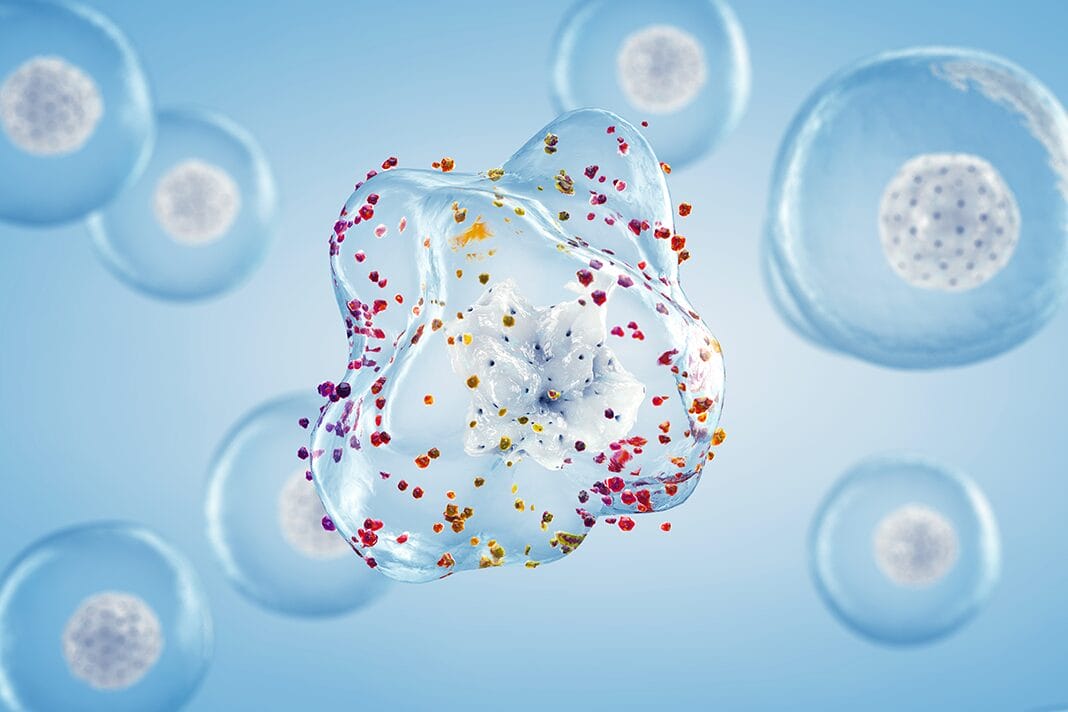
The process of aging has long been studied, theorized about, and remained a topic of discussion amongst both scientists and the public. While chronological aging measures the passage of time, at the cellular level, another aging process occurs throughout the lifespan called “senescence.”
Cellular senescence is a state of irreversible cell-cycle arrest where cells permanently stop dividing but remain metabolically active and resistant to apoptosis. In essence, it’s the process by which a cell ages and permanently stops dividing but does not die. As time passes, senescent cells increase and begin to accumulate, contributing to the aging process.1-3
Senescence occurs in response to DNA damage brought on by factors such as oxidative stress, reactive oxygen species (ROS), and chronic inflammation.1,4 Thought to initially serve as a defense mechanism to protect against injury and malignancy, these cells can also facilitate the onset and progression of chronic diseases. This occurs through the secretion of a variety of proinflammatory cytokines, chemokines, and matrix metalloproteinases (MMPs) collectively referred to as the senescence-associated secretory phenotype (SASP), which can transform neighboring cells, driving further inflammation and tissue damage.1-4
The involvement of senescent cells has been widely studied in several age-related chronic diseases such as diabetes, cardiovascular disease, kidney disease, Alzheimer’s disease, and osteoporosis.1-4 SASP has been identified across various cell types – including fibroblasts, epithelial cells, vascular endothelial cells, and immunocompetent cells – where it contributes to age-dependent inflammation and tissue degeneration.3 Since the prevalence of periodontal disease increases with age, emerging evidence suggests that senescence may also contribute to its pathogenesis.1-4
Cellular Senescence in the Periodontal Environment
Research suggests that senescent cells can accumulate in alveolar bone, potentially increasing the risk of periodontitis. It is thought that when these senescent osteocytes secrete SASP and interact with bacteria, they may modify the surrounding microenvironment, worsening chronic periodontal inflammation and promoting further alveolar bone loss.1
Just as senescent cells and SASP appear to be associated with disease progression, the opposite may also occur. Factors such as chronic inflammation and oxidative stress caused by periodontitis could potentially lead to senescence. This environment may lead to premature senescence and cellular damage in gingival tissues, potentially increasing susceptibility to periodontal disease, even in younger populations.2
Research involving both animal models and in vitro human periodontal ligament (PDL) cells has further localized senescent cells within the PDL. These findings suggest that chronic periodontitis may be associated with senescent PDL cells, which not only contribute to a SASP-driven inflammatory response but may also accelerate tissue destruction through the upregulation of specific signaling molecules, such as microRNA-34a.3
Therapeutic Potential of Senotherapy in Periodontal Disease Treatment
Growing evidence suggests that targeting cellular senescence could slow the biological aging process, helping to reduce a range of age-related pathological conditions and tissue dysfunctions, likely including alveolar bone loss.1,4
A new class of drugs (senotherapeutics) is being explored that selectively target senescent cells and SASP. One of the most promising combinations of senotherapy includes dasatinib, a tyrosine kinase inhibitor, and quercetin, a plant-derived flavonoid with potent antioxidant and anti-inflammatory properties. These substances work synergistically to reduce the burden of senescent cells and SASP. While quercetin alone has been reported to reduce gingival inflammation and bone loss, the combination has been shown to improve physiological functions in several chronic conditions, including diabetes, arthritis, and osteoporosis, in preclinical trials.4
Building on this potential, researchers at Penn Dental Medicine examined the effects of dasatinib (D) and quercetin (Q) by monitoring levels of selected markers of senescence in vitro and in vivo. In vitro, human gingival keratinocyte cells were challenged by prolonged exposure to F. nucleatum. The cells that received the combination of DQ showed the greatest decrease in senescence markers, which suggests that the combination may improve cellular metabolism in gingival keratinocytes. Similarly, in vivo testing in a mouse model showed that orally administered DQ reduced senescent cell burden, SASP, and naturally occurring alveolar bone loss in older mice compared with the control group.4
“Our findings suggest that senotherapy offers a promising approach to preserving periodontal health,” says Dr. Esra Sahingur of the Penn Dental Medicine research team. “Periodontitis is more than a bacterial infection—it’s driven by immune and metabolic dysfunction, cellular aging, and inflammation. By targeting inflammation and senescent cells, we may disrupt [the] chronic disease cycle and unlock new preventive and therapeutic possibilities for oral and systemic health.”5
In Closing
As our understanding of senescence grows, there may come a time when dental clinicians reconsider how we view, prevent, and treat chronic periodontal disease. While further research is needed to ensure safety and efficacy, early studies suggest that emerging senotherapeutic approaches may one day offer a promising adjunct to periodontal treatment. By targeting senescence and the underlying cellular mechanisms of disease onset and progression, we may eventually unlock new possibilities for preserving both oral and systemic health.
Before you leave, check out the Today’s RDH self-study CE courses. All courses are peer-reviewed and non-sponsored to focus solely on high-quality education. Click here now.
Listen to the Today’s RDH Dental Hygiene Podcast Below:
References
- Chen, S., Zhou, D., Liu, O., et al. Cellular Senescence and Periodontitis: Mechanisms and Therapeutics. Biology (Basel). 2022; 11(10): 1419. https://pmc.ncbi.nlm.nih.gov/articles/PMC9598109/
- Rattanaprukskul, K., Xia, X.J., Jiang, M., et al. Molecular Signatures of Senescence in Periodontitis: Clinical Insights. J Dent Res. 2024; 103(8): 800-808. https://pmc.ncbi.nlm.nih.gov/articles/PMC11308264/
- Ikegami, K., Yamashita, M., Suzuki, M., et al. Cellular Senescence with SASP in Periodontal Ligament Cells Triggers Inflammation in Aging Periodontal Tissue. Aging (Albany NY). 2023; 15(5): 1279-1305. https://pmc.ncbi.nlm.nih.gov/articles/PMC10042704/
- Rattanaprukskul, K., Xia, X.J., Hysa, M., et al. Dasatinib and Quercetin Limit Gingival Senescence, Inflammation, and Bone Loss. J Dent Res. 2025; 104(4): 419-427. https://pmc.ncbi.nlm.nih.gov/articles/PMC11909784/
- New Drug Therapy with Natural Compound Shows Promise Against Periodontal Diseases. (2025, April 11). University of Pennsylvania: Penn Dental Medicine. https://www.dental.upenn.edu/news-events/2025/04/11/new-drug-therapy-with-natural-compound-shows-promise-against-periodontal-diseases/